
Release & story order
Mario timeline
Super Mario platformers from the 1985 NES original through Super Mario Bros Wonder (2023)—US release dates, a suggested episode order where Nintendo gives hints (Yoshi's Island prequel, Galaxy 2 sequel), and FAQ for extended fan chronologies, New Donk City before SMB, New Super Mario, and Kart/RPG spin-offs. Theatrical films (1993, Illumination 2023/2026) live on Mario movie watch order.
Pick your path:
Release order
When Nintendo shipped each main Super Mario platformer in the US—NES (1985) through Switch (2023). Mario Kart, Party, sports, and level editors are optional, not numbered platformer entries here.
- Newcomers → Super Mario Odyssey or Super Mario Bros Wonder—modern polish on Switch
- 2D fans → Super Mario Bros Wonder, then New Super Mario Bros U Deluxe or NES/SNES classics via Nintendo Switch Online
- 3D arc → Super Mario 64 → Sunshine → Galaxy → Galaxy 2 → 3D Land → 3D World → Odyssey
- Lore historians → Release tab 1985–2023, then read extended chronology FAQ for Yoshi's New Island and pre-SMB games—not on main entries
- Full historian → Release tab includes Game Boy Land chapters and one Super Mario RPG spin-off entry
- Mario Party marathon → see Party & sports FAQ for numbered US release order—not on platformer entries
Story order tips
Nintendo does not publish a strict Mario chronology—most platformers are standalone rescue-the-Princess episodes. story-order titles here follow loose hints only: Yoshi's Island as baby-Mario prequel, classic 2D block, then 3D eras ending with Odyssey and Wonder. Galaxy 2 is a direct sequel to Galaxy; everything else is optional lore order.
- Suggested lore path: Yoshi's Island → Super Mario Bros trilogy era → Super Mario World → 64 → Sunshine → Galaxy → Galaxy 2
- Hardcore chronologies add Yoshi's New Island, Touch & Go, and Yoshi's Island DS before adult Mario—FAQ extended path
- Before SMB: fan timelines place Mario Bros (arcade) and Donkey Kong-era New Donk City jobs—not on story-order titles here
- Handheld 3D Land and console 3D World are separate episodes—not strict sequels to Sunshine
- All four New Super Mario Bros games are standalone—no story link between DS, Wii, 3DS, and Wii U entries
- US SMB2 is Mario's dream; Japanese Lost Levels (SMB2 JP) is the direct sequel to SMB1 in strict 2D lore
Story order
Nintendo does not publish a strict Mario chronology—most platformers are standalone rescue-the-Princess episodes. story-order titles here follow loose hints only: Yoshi's Island as baby-Mario prequel, classic 2D block, then 3D eras ending with Odyssey and Wonder. Galaxy 2 is a direct sequel to Galaxy; everything else is optional lore order.
- Suggested lore path: Yoshi's Island → Super Mario Bros trilogy era → Super Mario World → 64 → Sunshine → Galaxy → Galaxy 2
- Hardcore chronologies add Yoshi's New Island, Touch & Go, and Yoshi's Island DS before adult Mario—FAQ extended path
- Before SMB: fan timelines place Mario Bros (arcade) and Donkey Kong-era New Donk City jobs—not on story-order titles here
- Handheld 3D Land and console 3D World are separate episodes—not strict sequels to Sunshine
- All four New Super Mario Bros games are standalone—no story link between DS, Wii, 3DS, and Wii U entries
- US SMB2 is Mario's dream; Japanese Lost Levels (SMB2 JP) is the direct sequel to SMB1 in strict 2D lore
Timeline
When each game was released. Click a game for platforms, dates, and where it fits in your playthrough.
Release order
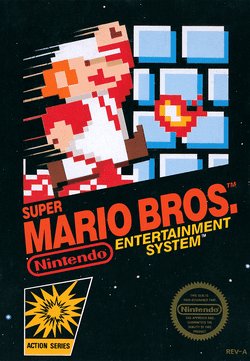
Super Mario Bros.
NESPlatformerMainline2DSuper Mario Bros. — Mario and Luigi save the Mushroom Kingdom—Bowser's first platformer siege. World 1-1 invents the modern platformer lesson in seconds—pipes, coins, and Bowser’s siege.
- Overview
- Defined the side-scrolling platformer—power-ups, secret pipes, and world structure on NES. Power-up ladder and secret exits teach exploration without an RPG map.
- In-game setting
- Mario and Luigi save the Mushroom Kingdom—Bowser's first platformer siege. World 1-1 became gaming's template; bundled with NES worldwide.
- Should you play it?
- Franchise foundation via NSO/collections. Racing spin-offs: Mario Kart; RPG comedy: Mario & Luigi.
- Release date
- US NES launch October 18, 1985. Japan Famicom September 1985.
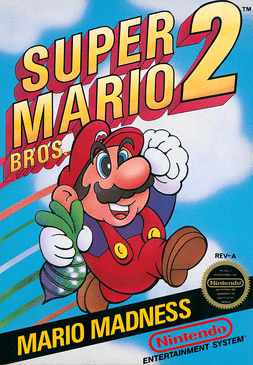
Super Mario Bros. 2
NESPlatformerMainline2DSuper Mario Bros. 2 — US version—Subcon dream adventure with four playable heroes. US SMB2 is the Doki Doki Panic reskin—vegetables, vertical stages, four heroes.
- Overview
- Western SMB2 is a reskin of Doki Doki Panic—pick-up-and-throw vegetables, vertical stages. US version—Subcon dream adventure with four playable heroes.
- In-game setting
- US version—Subcon dream adventure with four playable heroes. US SMB2 is the Doki Doki Panic reskin—vegetables, vertical stages, four heroes. Not a direct sequel to SMB1 in Japan; Lost Levels (1986) is the true SMB2 there—see FAQ.
- Should you play it?
- Release order second numbered Mario platformer in the West. Western Release #2; Japan’s true sequel is The Lost Levels (FAQ). Mainline platformers are mostly standalone episodes—Bowling for lore continuity is optional.
- Release date
- US NES launch October 9, 1988. Confirm the Super Mario Bros. 2 SKU for your region before buying.
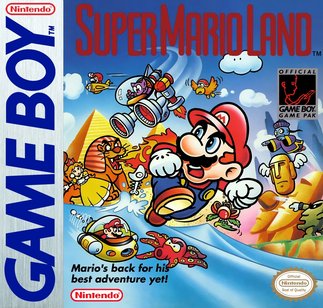
Super Mario Land
Game BoyPlatformerMainlineHandheldSuper Mario Land — First portable Mario—Sarasaland and Princess Daisy. Sarasaland handheld debut—Daisy, not Peach, and shorter Game Boy stages.
- Overview
- Gunpei Yokoi handheld chapter—shorter stages tuned for Game Boy. Power-up fantasy and precise jump craft remain Mario’s design language across 2D and 3D.
- In-game setting
- First portable Mario—Sarasaland and Princess Daisy. Sarasaland handheld debut—Daisy, not Peach, and shorter Game Boy stages. Standalone adventure; Daisy debuts—not the Mushroom Kingdom Princess.
- Should you play it?
- Handheld side series—see Super Mario Land 2 next in release order. Side portable lane; continue into Land 2 for Wario’s birth. Mainline platformers are mostly standalone episodes—Bowling for lore continuity is optional.
- Release date
- US Game Boy launch pack-in August 1989. Confirm the Super Mario Land SKU for your region before buying.
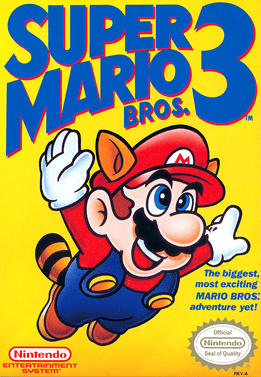
Super Mario Bros. 3
NESPlatformerMainline2DSuper Mario Bros. 3 — World map, Tanooki Suit, and airship fortresses. World map, suits, and airships push 8-bit Mario to its theatrical peak.
- Overview
- Overworld map and suit power-ups pushed NES to its peak before 16-bit. Overworld inventory and Koopaling castles redefine structure before SNES.
- In-game setting
- World map, Tanooki Suit, and airship fortresses. World map, suits, and airships push 8-bit Mario to its theatrical peak. Seven kings transformed; Bowser's kids guard each world.
- Should you play it?
- Peak 8-bit Mario—often bundled in All-Stars and Switch Online. Peak NES Mario—All-Stars / NSO still the easy replay. Mainline platformers are mostly standalone episodes—Bowling for lore continuity is optional.
- Release date
- US NES launch February 12, 1990. Confirm the Super Mario Bros. 3 SKU for your region before buying.
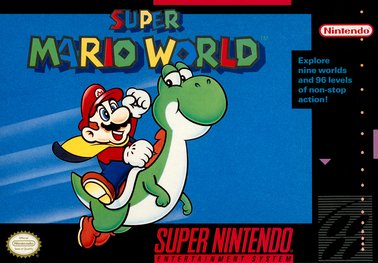
Super Mario World
SNESPlatformerMainline2DSuper Mario World — Dinosaur Land showcase—Yoshi, Cape flight, and multiple exits on SNES launch energy.
- Overview
- SNES launch showcase—large levels, multiple exits, and riding Yoshi. Dinosaur Land showcase—Yoshi, Cape flight, and multiple exits on SNES launch energy.
- In-game setting
- Dinosaur Land showcase—Yoshi, Cape flight, and multiple exits on SNES launch energy. Follows SMB3 in many fan chronologies; introduces Yoshi species.
- Should you play it?
- Essential 16-bit chapter—Switch Online and Super Nintendo Classic. Yoshi’s debut here feeds the baby prequel on Story via Yoshi's Island. Mainline platformers are mostly standalone episodes—Bowling for lore continuity is optional. Current digital editions are usually easier than hunting original discs.
- Release date
- US SNES launch August 13, 1991. Confirm the Super Mario World SKU for your region before buying.
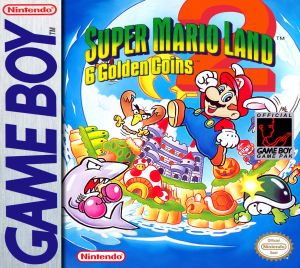
Super Mario Land 2: 6 Golden Coins
Game BoyPlatformerMainlineHandheldSuper Mario Land 2: 6 Golden Coins — Mario Zone hub vs Wario—rival debut that spins into Wario Land FAQ branches.
- Overview
- Non-linear hub map on Game Boy—Wario as final boss. Power-up fantasy and precise jump craft remain Mario’s design language across 2D and 3D.
- In-game setting
- Mario Zone hub vs Wario—rival debut that spins into Wario Land FAQ branches. Direct sequel to Super Mario Land; Wario spin-offs branch from here.
- Should you play it?
- Optional for platformer canon—Wario Land is a separate FAQ branch. Mainline platformers are mostly standalone episodes—Bowling for lore continuity is optional. Current digital editions are usually easier than hunting original discs.
- Release date
- US Game Boy launch November 2, 1992. Confirm the Super Mario Land 2: 6 Golden Coins SKU for your region before buying.
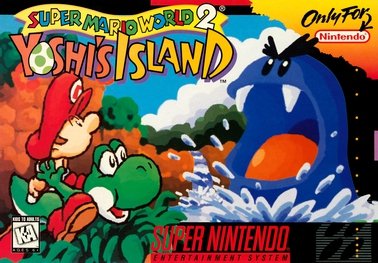
Super Mario World 2: Yoshi's Island
SNESPlatformerMainlinePrequelSuper Mario World 2: Yoshi's Island — Baby Mario on Yoshi's back—origin story before the bros grow up. Baby Mario on Yoshi’s back—pastel prequel before grown-up Mushroom Kingdom sieges.
- Overview
- Hand-drawn pastel aesthetic and Yoshi as protagonist carrying Mario. Baby Mario on Yoshi's back—origin story before the bros grow up.
- In-game setting
- Story prequel—Yoshi's New Island and Yoshi's Island DS extend baby lore in FAQ extended path. Baby lore extends in Yoshi spin-offs (FAQ), not required here.
- Should you play it?
- First story-order titles on suggested lore order—not a SMB sequel despite the title. Remasters and current storefront editions usually beat original hardware alone.
- Release date
- US SNES launch October 4, 1995. Confirm the Super Mario World 2: Yoshi's Island SKU for your region before buying.
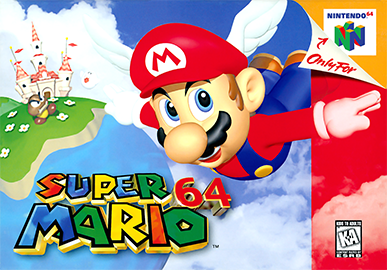
Super Mario 64
N64PlatformerMainline3DSuper Mario 64 (1996)—defined 3D platforming—analog movement, camera, and hub worlds. Camera negotiation and mission stars become the 3D template for a decade.
- Overview
- Defined 3D platforming—analog movement, camera, and hub worlds. Camera negotiation and mission stars become the 3D template for a decade.
- In-game setting
- defined 3D platforming—analog movement, camera, and hub worlds. Camera negotiation and mission stars become the 3D template for a decade. Standalone episode—no required link to 2D games beyond character roster.
- Should you play it?
- Start of the 3D Mario line—remastered on DS and Switch collections. 3D line opener—DS remake and collections exist; Story treats it as a castle episode. Mainline platformers are mostly standalone episodes—Bowling for lore continuity is optional.
- Release date
- US N64 launch September 26, 1996. Confirm the Super Mario 64 SKU for your region before buying.
 Optional
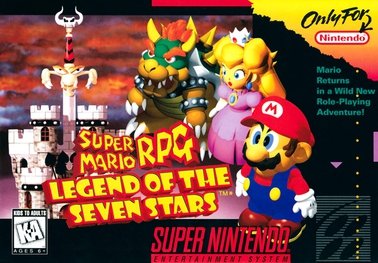
Super Mario RPG
SNESRPGSpin-offSuper Mario RPG is Square’s turn-based Mushroom Kingdom comedy with Geno and Smithy—spin-off, not platformer Story.
- Overview
- First Mario RPG—action commands in battles; separate from platformer canon. Series craft here still shapes how fans describe later entries.
- In-game setting
- Remake Super Mario RPG (2023) on Switch—same story, new visuals. Use adjacent entries if you need cast or setting continuity.
- Should you play it?
- Off primary Story; prefer the 2023 Switch remake. Paper path: Paper Mario. Current digital editions are usually easier than hunting original discs.
- Release date
- US SNES launch November 17, 1996. Confirm the Super Mario RPG SKU for your region before buying.
Super Mario Sunshine
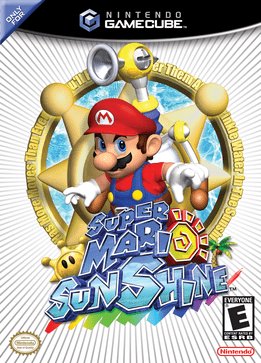
GameCubePlatformerMainline3DSuper Mario Sunshine — Isle Delfino vacation gone wrong—FLUDD water pack and Shadow Mario.
- Overview
- Sun-soaked open hubs with graffiti cleanup mechanics on GameCube. Power-up fantasy and precise jump craft remain Mario’s design language across 2D and 3D.
- In-game setting
- Isle Delfino vacation gone wrong—FLUDD water pack and Shadow Mario. Direct 3D follow-up feel after 64—standalone island episode.
- Should you play it?
- Often paired with 64 and Galaxy on "3D Mario" lists. Pair with 64 and Galaxy on 3D lists; standalone island episode on Story. Mainline platformers are mostly standalone episodes—Bowling for lore continuity is optional.
- Release date
- US GameCube launch August 26, 2002. Confirm the Super Mario Sunshine SKU for your region before buying.
New Super Mario Bros.
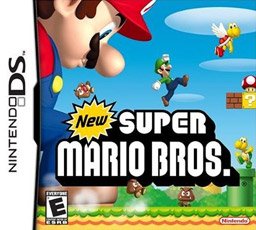
Nintendo DSPlatformerMainline2DNew Super Mario Bros. (2006)—returned to side-scrolling after 3D era—spawned the New Super sub-series. Power-up fantasy and precise jump craft remain Mario’s design language across 2D and 3D.
- Overview
- Returned to side-scrolling after 3D era—spawned the New Super sub-series. Power-up fantasy and precise jump craft remain Mario’s design language across 2D and 3D.
- In-game setting
- returned to side-scrolling after 3D era—spawned the New Super sub-series. Standalone episode—no story connection to other New Super entries.
- Should you play it?
- First of four unrelated New Super games—see FAQ. Mainline platformers are mostly standalone episodes—Bowling for lore continuity is optional. Remasters and current storefront editions usually beat original hardware alone.
- Release date
- US DS launch May 15, 2006. Platforms: Nintendo DS. Confirm the New Super Mario Bros. SKU for your region before buying.
Super Mario Galaxy
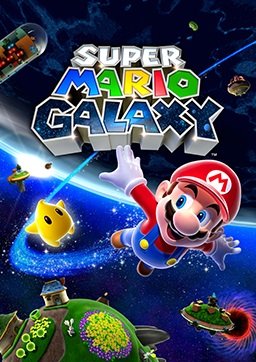
WiiPlatformerMainline3DSuper Mario Galaxy (2007)—spherical worlds and motion-friendly star collection on Wii. Key chapter in Super Mario Galaxy—see Start Here for path priority.
- Overview
- Spherical worlds and motion-friendly star collection on Wii. Key chapter in Super Mario Galaxy—see Start Here for path priority.
- In-game setting
- spherical worlds and motion-friendly star collection on Wii. Galaxy 2 is a direct sequel—only clear two-game story chain in 3D Mario.
- Should you play it?
- Essential 3D chapter—Switch remaster Super Mario Galaxy + Galaxy 2 (2024). Essential 3D chapter; 2025 collection pairs it with Galaxy 2. Mainline platformers are mostly standalone episodes—Bowling for lore continuity is optional. Remasters and current storefront editions usually beat original hardware alone.
- Release date
- US Wii launch November 12, 2007. Confirm the Super Mario Galaxy SKU for your region before buying.
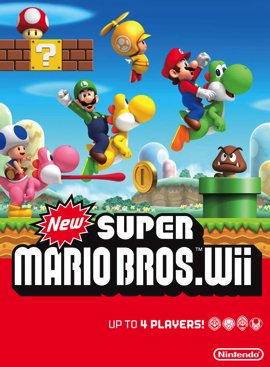
New Super Mario Bros. Wii
WiiPlatformerMainline2DNew Super Mario Bros. Wii (2009)—simultaneous multiplayer in classic sidescrolling on Wii. Power-up fantasy and precise jump craft remain Mario’s design language across 2D and 3D.
- Overview
- Simultaneous multiplayer in classic sidescrolling on Wii. Power-up fantasy and precise jump craft remain Mario’s design language across 2D and 3D.
- In-game setting
- simultaneous multiplayer in classic sidescrolling on Wii. Power-up fantasy and precise jump craft remain Mario’s design language across 2D and 3D. Standalone—same brand as NSMB DS but no shared plot.
- Should you play it?
- Switch port New Super Mario Bros. U Deluxe bundles the Wii U sequel. Standalone New Super night—plot does not continue into U. Mainline platformers are mostly standalone episodes—Bowling for lore continuity is optional. Remasters and current storefront editions usually beat original hardware alone.
- Release date
- US Wii launch November 15, 2009. Confirm the New Super Mario Bros. Wii SKU for your region before buying.
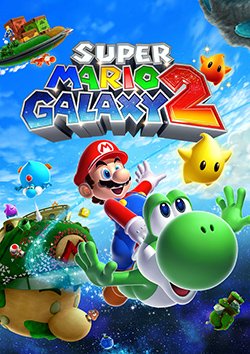
Super Mario Galaxy 2
WiiPlatformerMainline3DSuper Mario Galaxy 2 — Direct Galaxy sequel—Yoshi returns to planet hops with denser level ideas.
- Overview
- More focused hub structure than Galaxy 1—rare numbered Mario sequel. Power-up fantasy and precise jump craft remain Mario’s design language across 2D and 3D.
- In-game setting
- Direct Galaxy sequel—Yoshi returns to planet hops with denser level ideas. Play after Super Mario Galaxy on Story order.
- Should you play it?
- Included in 2024 Switch remaster bundle with Galaxy 1. Play after Galaxy; skip other 3D detours if you only want this pair. Mainline platformers are mostly standalone episodes—Bowling for lore continuity is optional. Current digital editions are usually easier than hunting original discs.
- Release date
- US Wii launch May 23, 2010. Confirm the Super Mario Galaxy 2 SKU for your region before buying.
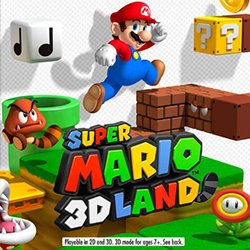
Super Mario 3D Land
Nintendo 3DSPlatformerMainline3DSuper Mario 3D Land — Hybrid 2.5D on 3DS—Tanooki return and timed runs. 3DS end-to-end linear 3D—tail suit and seamless stages without a hub castle.
- Overview
- Blends sidescrolling clarity with depth on handheld. Power-up fantasy and precise jump craft remain Mario’s design language across 2D and 3D.
- In-game setting
- Hybrid 2.5D on 3DS—Tanooki return and timed runs. 3DS end-to-end linear 3D—tail suit and seamless stages without a hub castle. Standalone episode—parallel to console 3D World, not a sequel.
- Should you play it?
- Handheld 3D Mario before Odyssey's open sandbox. Handheld 3D bridge toward 3D World’s co-op toys. Mainline platformers are mostly standalone episodes—Bowling for lore continuity is optional.
- Release date
- US 3DS launch November 13, 2011. Platforms: Nintendo 3DS.
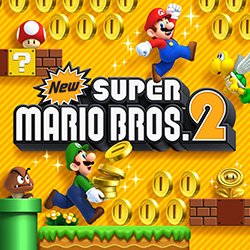
New Super Mario Bros. 2
Nintendo 3DSPlatformerMainline2DNew Super Mario Bros. 2 — Coin rush focus—another standalone 2D episode. Coin-rush 3DS New Super—Gold Flower spectacle over story ambition.
- Overview
- Gold Flower and one-million-coin challenge on 3DS. Power-up fantasy and precise jump craft remain Mario’s design language across 2D and 3D.
- In-game setting
- No narrative tie to other New Super games. Kart, RPG, and Paper branches live on satellite timelines when linked.
- Should you play it?
- Optional 2D chapter—Wonder supersedes for modern 2D fans. Optional 2D; not a sequel narrative to DS/Wii entries. Mainline platformers are mostly standalone episodes—Bowling for lore continuity is optional.
- Release date
- US 3DS launch August 19, 2012. Platforms: Nintendo 3DS.
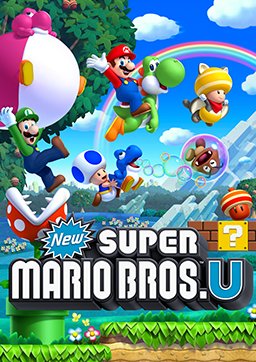
New Super Mario Bros. U
Wii UPlatformerMainline2DNew Super Mario Bros. U — Wii U launch 2D—Flying Squirrel suit and asymmetric Luigi gameplay in DLC. Wii U / Deluxe 2D—Nabbit, Boost Mode leftovers, and Switch Deluxe convenience.
- Overview
- HD sidescrolling with GamePad boost mode at Wii U launch. Power-up fantasy and precise jump craft remain Mario’s design language across 2D and 3D.
- In-game setting
- Wii U launch 2D—Flying Squirrel suit and asymmetric Luigi gameplay in DLC. New Super Luigi U DLC shipped 2013 as harder remix—same story frame.
- Should you play it?
- Buy as New Super Mario Bros. U Deluxe on Switch. Mainline platformers are mostly standalone episodes—Bowling for lore continuity is optional.
- Release date
- US Wii U launch November 18, 2012. Confirm the New Super Mario Bros. U SKU for your region before buying.
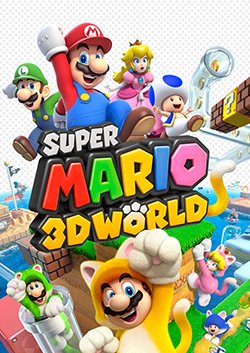
Super Mario 3D World
Wii UPlatformerMainline3DSuper Mario 3D World — Console 3D with four-player co-op—Cat Mario and Champion's Road. Cat suits and four-player 3D courses—arcade clarity over hub exploration.
- Overview
- Fixed-camera 3D levels designed for multiplayer on Wii U. Series craft here still shapes how fans describe later entries.
- In-game setting
- Console 3D with four-player co-op—Cat Mario and Champion's Road. Cat suits and four-player 3D courses—arcade clarity over hub exploration. Bowser’s Fury is a 2021 sandbox add-on in the same purchase on Switch.
- Should you play it?
- Switch bundle Super Mario 3D World + Bowser's Fury (2021). Mainline platformers are mostly standalone episodes—Bowling for lore continuity is optional. Current digital editions are usually easier than hunting original discs.
- Release date
- US Wii U launch November 22, 2013. Confirm the Super Mario 3D World SKU for your region before buying.
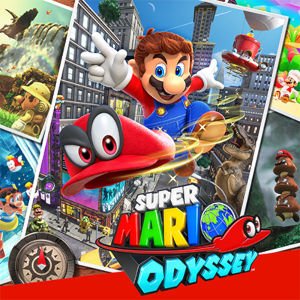
Super Mario Odyssey
Nintendo SwitchPlatformerMainline3DSuper Mario Odyssey turns hat possession into a kingdom-hopping Switch sandbox—Cappy, the Odyssey airship, and 2D-to-3D fluency at launch scale.
- Overview
- Open kingdoms with moons instead of stars—Switch showcase launch window title. Capture mechanic reframes Mario’s body as a toolkit, not just a jumper.
- In-game setting
- Standalone episode—no required link to Galaxy or 3D World plots. Super Mario Odyssey turns hat possession into a kingdom-hopping Switch sandbox—Cappy, the Odyssey airship, and 2D-to-3D fluency at launch scale.
- Should you play it?
- Best modern 3D entry—New Donk City FAQ ties aside. Kart nights live on Mario Kart. Current digital editions are usually easier than hunting original discs.
- Release date
- US Switch launch October 27, 2017. Platforms: Nintendo Switch.
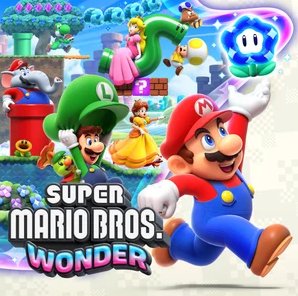
Super Mario Bros. Wonder
Nintendo SwitchPlatformerMainline2DSuper Mario Bros. Wonder — Flower Kingdom—Wonder Effects transform sidescrolling. Wonder flowers rewrite 2D rules mid-stage—Elephant Mario and badge experiments.
- Overview
- First new side-scrolling Mario since New Super—Elephant Mario and shifting levels. Transformation spectacle plus online ghosts modernize side-scrolling surprise.
- In-game setting
- Flower Kingdom—Wonder Effects transform sidescrolling. Wonder flowers rewrite 2D rules mid-stage—Elephant Mario and badge experiments. Latest mainline platformer entry as of June 2026.
- Should you play it?
- Current 2D Mario endpoint—pairs with Odyssey for full modern duo. Standalone from New Super brand. Mainline platformers are mostly standalone episodes—Bowling for lore continuity is optional.
- Release date
- US Switch launch October 20, 2023. Platforms: Nintendo Switch.
FAQ
Release vs suggested story order, no official Mario chronology, extended Yoshi and pre-SMB lore, SMB2 vs Lost Levels, New Super standalone episodes, Mario Party and sports play order (optional—no separate timeline pages), and what we leave off (Maker, mobile runners).
Release order
Release order is when each Super Mario platformer launched in the US (1985–2023)—including Game Boy Land chapters and the Super Mario RPG spin-off entry. Story order is our suggested episode sequence using loose Nintendo hints: Yoshi's Island prequel, classic 2D block, 3D adventures, and Galaxy → Galaxy 2 as the only strict sequel pair. Most Mario games are standalone rescues—Story order is editorial, not official canon.
Modern first → Super Mario Odyssey (3D sandbox) or Super Mario Bros Wonder (2D). Classic curious → Super Mario Bros via Switch Online, then Super Mario World or Super Mario 64. Full saga → Release tab from 1985—expect standalone episodes, not one continuous plot. Skip Super Mario Land unless you want handheld history.
Story & canon
No—unlike The Legend of Zelda, Nintendo does not publish a locked Mario chronology. Characters recur and Galaxy 2 follows Galaxy, but most platformers reset Peach-and-Bowser plots. Our Story tab groups games by era and fan consensus (Yoshi's Island first, Galaxy pair together). Community timelines that include every spin-off exist but are debated and not official—see extended chronology FAQ.
Hardcore fan timelines often expand the baby era: Yoshi's Island → Yoshi Touch & Go → Yoshi's New Island → Yoshi's Island DS → Yoshi's Story, then adult Mario. None of that beyond Yoshi's Island is on our story-order titles—Nintendo never confirmed one locked order. Paper Mario, Mario & Luigi, Luigi's Mansion, and Kart each have their own sub-chains in those fan lists. Use our Story tab for platformer episodes; use this FAQ if you want the wider lore rabbit hole without treating any fan order as gospel.
Not on separate must-play titles on this timeline here. Fan chronologies and Super Mario Odyssey's New Donk City place an earlier arc: Donkey Kong (Pauline, carpenter Mario) → Donkey Kong Jr. → jobs in New Donk City (Wrecking Crew, Mario Bros arcade plumbers in the sewers) → then Mario and Luigi reach the Mushroom Kingdom for Super Mario Bros. Super Mario Maker course "Did Somebody Call a Plumber?" hints the pipe transition. Donkey Kong and Mario Bros are separate series entries—play for history, not required for our platformer Story order.
No—New Super Mario Bros (DS), New Super Mario Bros Wii, New Super Mario Bros 2 (3DS), and New Super Mario Bros U are separate sidescrolling episodes. Play in release order for history or pick one on Switch (U Deluxe or Wonder). None are required for 3D Mario story-order titles.
Remasters & collections
Other timelines
Mario movie watch order — theatrical films: 1993 live-action, Illumination 2023, and Galaxy 2026. Best for cinema binge paths separate from game Story years.
Mario Kart — every home and handheld Kart from Super Mario Kart through Mario Kart 8 Deluxe. Best for racing—no story order needed.
Paper Mario — partner-based RPGs and the Sticker Star reboot branch. Best for story-driven Mario RPGs.
Mario & Luigi — bros RPG saga from Superstar Saga through Brothership. Best for action-command turn-based comedy RPGs.
Luigi's Mansion — Luigi's ghost-hunting trilogy. Best for action-adventure spin-offs.
Mario Party and sports — no separate timeline pages; US release order and why are in the Party & sports FAQ below.
Party & sports
Optional & spin-offs
More timelines
Other release-order and story-order guides on this site.
- Media
Mario Movies
Mario movie watch order—Illumination’s Super Mario Bros. Movie (2023), The Super Mario…
- Game series
Mario Kart
Mario Kart games in US release order (1992–2020)—SNES through Switch, Mario Kart 8…
- Game series
Mario & Luigi
Mario & Luigi RPGs in US release and story order (2003–2024)—Superstar Saga through…
- Game series
Paper Mario
Paper Mario release and story order (2001–2020)—TTYD, Super Paper Mario, Sticker Star…
- Game series
Luigi's Mansion
Luigi's Mansion release and story order (2001–2019)—GameCube through Switch,…
- Consoles
Nintendo consoles
All Nintendo consoles in US release order (1985–2025)—NES through Switch 2, Game Boy,…
- Game series
The Legend of Zelda
Zelda release and story order (1987–2024), official timeline branches after Ocarina,…
- Game series
Animal Crossing
Animal Crossing games in order (2002–2020)—GameCube through New Horizons, remakes,…
- Game series
Splatoon
Splatoon games in order (2015–2022)—Wii U through Splatoon 3, Octo Expansion and Side…
- Game series
Super Smash Bros.
Super Smash Bros games in order (1999–2018)—N64 through Ultimate, separate 3DS/Wii U…
- Game series
Celeste
Celeste chapters and games in order—base mountain climb through Farewell—with dual…