
Release & story order
The Legend of Zelda timeline
Every main Legend of Zelda game by release date or in-story order—from the 1987 original through Echoes of Wisdom—with the three official timelines grouped after Ocarina of Time and notes on remakes and optional side games. Release covers ship dates: When each game was released. Remakes are separate titles—same story as the originals, different purchase. Story follows fiction: When events happen in Hyrule's history. Use Start Here and Essentials for a 2026 default path; FAQ covers remasters, spin-offs, and skip costs.
Pick your path:
Where to start
Pick Open-world for Breath of the Wild → Tears of the Kingdom, Classic 3D for Ocarina / Majora's Mask / Twilight Princess (HD remakes on Switch), or 2D classics for A Link to the Past through Echoes of Wisdom. Remakes on the full list replace originals—buy one version per story.
- Open-world pair is the default 2026 newcomer path—earlier games are optional lore
- Classic 3D uses 3D remakes where listed; Wind Waker HD is the Adult-branch alternative to Twilight Princess
- Oracle games: Seasons then Ages on Story order; either alone works on Release
- Musou and rhythm spin-offs stay on the full list—use Hide optional
Release order
When each game was released. Remakes are separate titles—same story as the originals, different purchase. Most newcomers start with Breath of the Wild or Ocarina of Time, not the 1987 original.
- Open-world path → Breath of the Wild → Tears of the Kingdom (Echoes of Wisdom is a separate 2D adventure on Switch)
- Classic 3D path → Ocarina of Time → Majora's Mask → Wind Waker or Twilight Princess
- 2D Fallen hero path → A Link to the Past → Link's Awakening → Oracle duo → A Link Between Worlds → Echoes of Wisdom
- Oracle games—play Seasons then Ages (or either alone); see the questions below
- Spin-offs (Cadence, Crossbow, musou) → Spin-offs FAQ below—not on main release-order titles
Story order tips
When events happen in Hyrule's history. Skyward Sword is the earliest main game; Ocarina of Time splits lore into three parallel branches; Breath of the Wild and Tears of the Kingdom sit thousands of years later—mostly as legend, not recent history.
- Earliest to latest main chain: Skyward Sword → … → Ocarina → (three branches) → Breath of the Wild → Tears of the Kingdom
- After Ocarina, follow one branch at a time—Child, Adult, or Fallen hero—not every game in release order
- Fallen hero order on this page: A Link to the Past → Link's Awakening → Oracle → A Link Between Worlds → Tri Force Heroes (optional) → Echoes of Wisdom → NES Zelda I & II
- Far future (Breath / Tears): treat earlier games as in-universe legend — Nintendo has not picked a branch
- Tri Force Heroes and Four Swords Adventures are optional co-op — skip on solo lore runs
Story order
When events happen in Hyrule's history. Skyward Sword is the earliest main game; Ocarina of Time splits lore into three parallel branches; Breath of the Wild and Tears of the Kingdom sit thousands of years later—mostly as legend, not recent history.
- Earliest to latest main chain: Skyward Sword → … → Ocarina → (three branches) → Breath of the Wild → Tears of the Kingdom
- After Ocarina, follow one branch at a time—Child, Adult, or Fallen hero—not every game in release order
- Fallen hero order on this page: A Link to the Past → Link's Awakening → Oracle → A Link Between Worlds → Tri Force Heroes (optional) → Echoes of Wisdom → NES Zelda I & II
- Far future (Breath / Tears): treat earlier games as in-universe legend — Nintendo has not picked a branch
- Tri Force Heroes and Four Swords Adventures are optional co-op — skip on solo lore runs
Timeline
When each game was released. Click a game for platforms, dates, and where it fits in your playthrough.
Release order
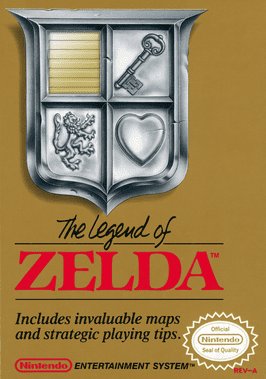
The Legend of Zelda
NESAction-adventureClassicThe Legend of Zelda (1987) is the series template—eight dungeons, a secret-filled overworld, and almost no hand-holding on NES. Harsh for newcomers, essential for franchise history.
- Overview
- Open-ended action-adventure with non-linear dungeon order and hidden secrets unusual for mid-80s consoles. The Legend of Zelda (1987) is the series template—eight dungeons, a secret-filled overworld, and almost no hand-holding on NES.
- In-game setting
- Link gathers Triforce pieces to rescue Zelda from Ganon. Sequel: Zelda II. Related musou spin-offs are optional; compare adventure structure later in A Link to the Past.
- Should you play it?
- Historically important but brutal—start with Breath of the Wild or A Link to the Past unless you want the full retro run. Story placement sits late on the Fallen hero branch.
- Release date
- US NES launch August 22, 1987. Japan Famicom Disk System February 21, 1986.
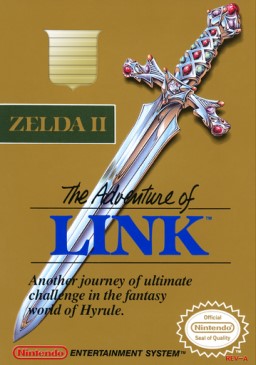
Zelda II: The Adventure of Link
NESAction-adventureClassicZelda II: The Adventure of Link is the side-scrolling RPG black sheep—XP, magic, and palace crystals instead of top-down dungeons. Optional for many marathons, canonical on the Fallen hero line.
- Overview
- Side-view combat and town/RPG structure remain unique among mainline Zelda. Still the only numbered entry built like an action-RPG platformer.
- In-game setting
- Fallen hero timeline years after the first game. Link places crystals to awaken Zelda and stop Ganon's return. Next classic 2D leap: A Link to the Past.
- Should you play it?
- Optional lore beat after the NES original—many lists skip it. Play after Zelda I if completing Fallen hero classics. Not required before modern 3D entries.
- Release date
- US NES launch December 1988 (Japan Famicom Disk System January 1987).
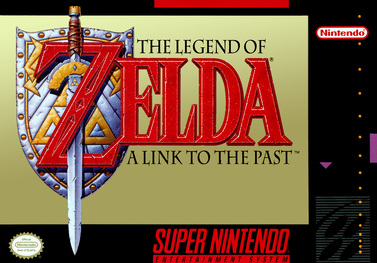
The Legend of Zelda: A Link to the Past
SNESAction-adventureClassicA Link to the Past is the SNES classic—Light/Dark World switching, the Master Sword, and the Triforce wish that later lore keeps citing. Best classic 2D entry point for most players.
- Overview
- Dual-world structure, dungeon items that unlock overworld routes, and a tighter narrative than the NES games. Template for 2D Zelda for two decades.
- In-game setting
- Fallen hero branch after Ocarina's defeated timeline. Link stops Agahnim and Ganon. Follow with Link's Awakening, then the Oracle duo.
- Should you play it?
- Start here for classic 2D. Direct story sequel later: A Link Between Worlds. Remakes do not replace this entry's release history. Play before Link's Awakening on Fallen hero Story order.
- Release date
- US SNES launch April 13, 1992. Confirm the The Legend of Zelda: A Link to the Past SKU for your region before buying.
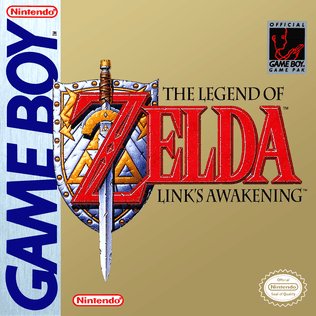
The Legend of Zelda: Link's Awakening
Game BoyAction-adventureLink's Awakening strands Link on dreamlike Koholint Island—no Hyrule or Triforce, but unforgettable characters and music. First portable Zelda and a self-contained emotional classic.
- Overview
- Trading sequences, quirky NPCs, and a smaller overworld tuned for Game Boy. Link's Awakening strands Link on dreamlike Koholint Island—no Hyrule or Triforce, but unforgettable characters and music.
- In-game setting
- Fallen hero timeline—same hero sails away after A Link to the Past. Remake entry: Link's Awakening (2019). Next: Oracle of Seasons/Ages.
- Should you play it?
- Play the 2019 Switch remake unless you want Game Boy history. Story stands alone after A Link to the Past on Fallen hero order. Oracle games follow on that branch.
- Release date
- US Game Boy launch August 1993. DX on Game Boy Color 1998. Prefer Switch remake (2019) for play.
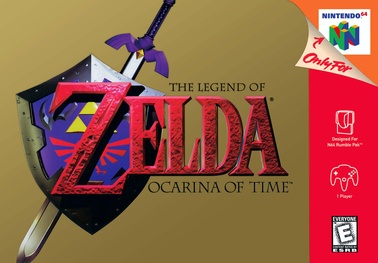
The Legend of Zelda: Ocarina of Time
N64Action-adventureClassicOcarina of Time is the 3D breakthrough—Z-targeting, child/adult dual eras, and the timeline split the whole franchise hangs on. Still the essential classic 3D Zelda.
- Overview
- Z-targeting, 3D dungeons, ocarina songs, and seven-year time travel set the action-adventure standard for years. Nintendo's official chronology branches after this game.
- In-game setting
- Child Link stops Ganondorf; adult Link awakens sages. Timeline splits into Child, Adult, and Fallen hero. Remake: Ocarina of Time 3D.
- Should you play it?
- Essential. Prefer Ocarina of Time 3D on 3DS/Switch Online paths if you want modern controls—same story. Play Majora's Mask next on Child branch or jump to other eras.
- Release date
- US Nintendo 64 launch November 23, 1998. Platforms: N64.
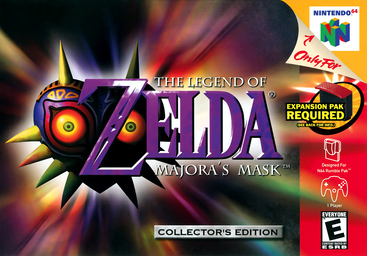
The Legend of Zelda: Majora's Mask
N64Action-adventureMajora's Mask is the darker direct sequel tone—72-hour loops, Termina, and transformation masks. More experimental than any mainline Zelda before Breath of the Wild.
- Overview
- Three-day cycle, mask transformations, and a dense side-quest web in a compact map. Emotionally distinct from Hyrule's Ganondorf arc while staying Child-timeline canon.
- In-game setting
- Child timeline immediately after Ocarina—Link searches for Navi and stops the moon. Remake: Majora's Mask 3D. Next Child: Twilight Princess.
- Should you play it?
- Play right after Ocarina in release or Child-timeline story order. Majora's Mask 3D is the convenient port. Not required before Adult or Fallen branches.
- Release date
- US Nintendo 64 launch October 26, 2000. Platforms: N64.
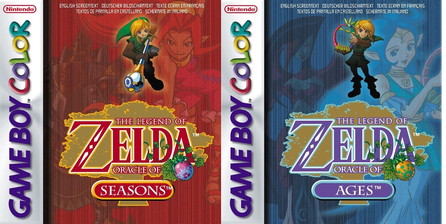
The Legend of Zelda: Oracle of Seasons
Game Boy ColorAction-adventureOracle of Seasons is half of the linked Game Boy Color duo—seasons reshape Holodrum's overworld. Partner with Oracle of Ages for the true finale.
- Overview
- Season rod puzzles and link-cable combined ending with Ages. Two cartridges designed as one flexible duology with shared villains in linked play.
- In-game setting
- New hero (not the ALttP Link). Din and the Rod of Seasons. Linked ending with Ages. Story tab combines both as one Oracle entry.
- Should you play it?
- Play Ages and Seasons back-to-back (order flexible—see FAQ). Either works solo. Both on Switch Online. Fallen hero placement after Link's Awakening.
- Release date
- US Game Boy Color launch May 14, 2001—same day as Oracle of Ages.
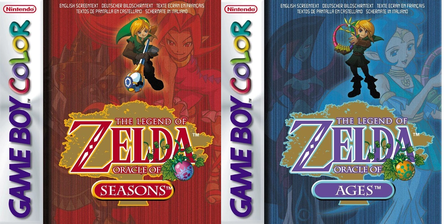
The Legend of Zelda: Oracle of Ages
Game Boy ColorAction-adventureOracle of Ages is the time-travel partner to Seasons—past/present Labrynna layers and seed puzzles. Linked play unlocks the duology's true ending.
- Overview
- Past/present map layers form the other half of Capcom/Nintendo's linked Oracle design. Same release day as Seasons on Game Boy Color.
- In-game setting
- Nayru and the Harp of Ages. Linked finale with Seasons. Next Fallen hero 3DS classic: A Link Between Worlds.
- Should you play it?
- Finish both Oracles for the linked ending. Switch Online hosts both. Story order places the duo after Link's Awakening on Fallen hero.
- Release date
- US Game Boy Color launch May 14, 2001. Confirm the The Legend of Zelda: Oracle of Ages SKU for your region before buying.
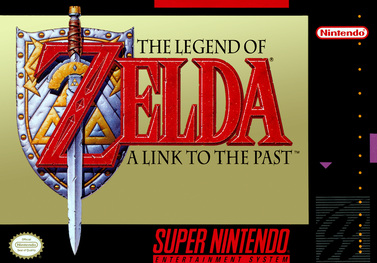 Optional
The Legend of Zelda: Four Swords
GBAMultiplayerOptionalFour Swords is multiplayer-only Zelda bundled with A Link to the Past on GBA—four Links, randomized stages, Vaati. Optional unless you want co-op or Vaati lore.
- Overview
- Co-op required design with the Four Sword splitting Link. Introduces Vaati for players who never touch Minish Cap first.
- In-game setting
- Official chronology before Ocarina. Vaati and Four Sword myth. Related co-op later: Four Swords Adventures, Tri Force Heroes.
- Should you play it?
- Skip for solo lore runs unless Anniversary Edition/co-op is available. Story places it before Ocarina; Four Swords Adventures is a separate later game.
- Release date
- US bundled with A Link to the Past GBA December 9, 2002.
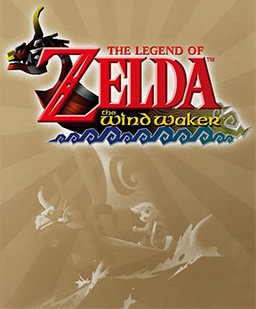
The Legend of Zelda: The Wind Waker
GameCubeAction-adventureThe Wind Waker is the cel-shaded Adult-timeline sea adventure—hundreds of years after Ocarina, sailing the Great Sea to stop Ganondorf. Art that aged better than 2003 realism bets.
- Overview
- Cel-shaded expression, wind sailing, and Conductor baton puzzles. Adult timeline: the Hero of Time is gone; a new Link rises.
- In-game setting
- Adult timeline opener on the Great Sea. HD remake entry separate. Direct handheld sequel: Phantom Hourglass.
- Should you play it?
- Prefer Wind Waker HD on Wii U (or later reissues if offered). Leads into Phantom Hourglass. Parallel Child branch is Twilight Princess, not a sequel.
- Release date
- US GameCube launch March 24, 2003. Confirm the The Legend of Zelda: The Wind Waker SKU for your region before buying.
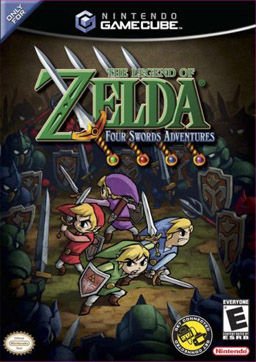 Optional
The Legend of Zelda: Four Swords Adventures
GameCubeMultiplayerOptionalFour Swords Adventures is co-op GameCube Zelda on the Child timeline—Vaati and shadow Link across Hyrule. Often skipped in solo playthroughs.
- Overview
- Four-player one-screen co-op with optional GBA link modes. Unusual hybrid console design for 2004. Four Swords Adventures is co-op GameCube Zelda on the Child timeline—Vaati and shadow Link across Hyrule.
- In-game setting
- Child timeline after Twilight Princess in official order. Last Child main entry before far-future era. Remakes share story placement with their originals—buy one version, not both for plot.
- Should you play it?
- Optional for solo players—hard to organize locally. Skip unless completing every Child-timeline entry after Twilight Princess.
- Release date
- US GameCube launch June 7, 2004. Same US release window as the matching Release-tab entry unless noted as a lore marker.
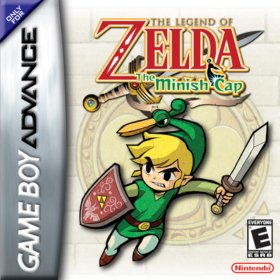
The Legend of Zelda: The Minish Cap
GBAAction-adventureThe Minish Cap originates the Four Sword and Vaati long before Ocarina—shrink to Minish size with Ezlo. Charming GBA peak of early-Hyrule lore.
- Overview
- Scale-changing dungeons and kinstone fusion open the map. Capcom/Nintendo craft a self-contained Vaati origin.
- In-game setting
- Early Hyrule history before Ocarina. Picori blade becomes the Four Sword. Next early lore co-op: Four Swords.
- Should you play it?
- Play before Four Swords in story order if you care about Vaati. Optional for BotW-first newcomers. Available on Switch Online GBA library where offered.
- Release date
- US GBA launch January 10, 2005. Confirm the The Legend of Zelda: The Minish Cap SKU for your region before buying.
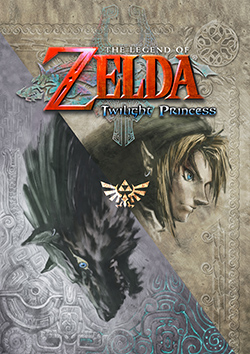
The Legend of Zelda: Twilight Princess
WiiGameCubeAction-adventureTwilight Princess is the mature Child-timeline epic—wolf Link, Midna, and a long cinematic quest decades after Majora's Mask. Darker tone than Wind Waker's branch.
- Overview
- Wii motion sword (optional on GameCube), wolf form, and large dual-realm hubs. Flagship late-GameCube/early-Wii Zelda.
- In-game setting
- Twilight Princess is the mature Child-timeline epic—wolf Link, Midna, and a long cinematic quest decades after Majora's Mask. Child timeline—Zant and Ganondorf. HD remake separate entry. Optional later Child: Four Swords Adventures.
- Should you play it?
- Prefer Twilight Princess HD on Wii U. Play after Majora's Mask on Child branch. Adult-timeline players should stay on Wind Waker path instead.
- Release date
- US Wii launch November 19, 2006; GameCube version December 11, 2006.
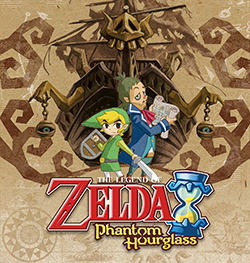
The Legend of Zelda: Phantom Hourglass
Nintendo DSAction-adventurePhantom Hourglass is the direct Wind Waker sequel on DS—same Link and Tetra, touch controls, Temple of the Ocean King time loop.
- Overview
- Stylus movement/combat and repeated temple runs define the DS Adult-timeline pair with Spirit Tracks. Phantom Hourglass is the direct Wind Waker sequel on DS—same Link and Tetra, touch controls, Temple of the Ocean King time loop.
- In-game setting
- Adult timeline after Wind Waker. Bellum and the Ghost Ship. Next Adult: Spirit Tracks. Remakes share story placement with their originals—buy one version, not both for plot.
- Should you play it?
- Play after Wind Waker / HD. DS-only unless you emulate. Leads into Spirit Tracks. Not on Child or Fallen branches. Official chronology still allows skipping optional co-op entries on a solo lore run.
- Release date
- US Nintendo DS launch October 1, 2007. Same US release window as the matching Release-tab entry unless noted as a lore marker.
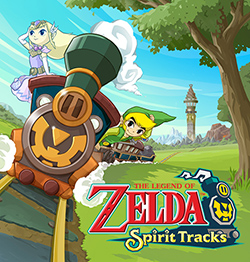
The Legend of Zelda: Spirit Tracks
Nintendo DSAction-adventureSpirit Tracks trains across New Hyrule generations after Phantom Hourglass—Phantom Zelda puzzles and Malladus. Latest main Adult-timeline game for now.
- Overview
- Drawable train tracks and Zelda spirit possession puzzles. Light tone closes the Adult handheld duology. Spirit Tracks trains across New Hyrule generations after Phantom Hourglass—Phantom Zelda puzzles and Malladus.
- In-game setting
- Adult timeline cap. New Hyrule geography differs from classic kingdom maps. Far future later: Breath of the Wild.
- Should you play it?
- End of Adult branch until Nintendo adds more. Play after Phantom Hourglass. Separate from BotW's far-future map. Official chronology still allows skipping optional co-op entries on a solo lore run.
- Release date
- US Nintendo DS launch December 7, 2009. Same US release window as the matching Release-tab entry unless noted as a lore marker.
 Preferred
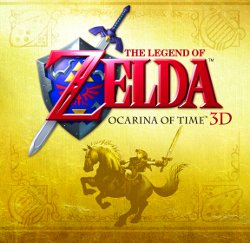
The Legend of Zelda: Ocarina of Time 3D
Nintendo 3DSRemakeOcarina of Time 3D rebuilds the 1998 classic for Nintendo 3DS—same timeline-split story with updated visuals, gyro aiming, and Master Quest.
- Overview
- Nintendo remade dungeon lighting and models while keeping the 1998 design intact. Includes Master Quest. Ocarina of Time 3D rebuilds the 1998 classic for Nintendo 3DS—same timeline-split story with updated visuals, gyro aiming, and Master Quest.
- In-game setting
- Same story placement as Ocarina of Time—the split point. Next Child: Majora's Mask 3D. Remakes share story placement with their originals—buy one version, not both for plot.
- Should you play it?
- Buy this instead of N64 Ocarina unless collecting originals. One purchase covers the story—do not also need the 1998 cart for plot.
- Release date
- US 3DS launch June 19, 2011. Same US release window as the matching Release-tab entry unless noted as a lore marker.
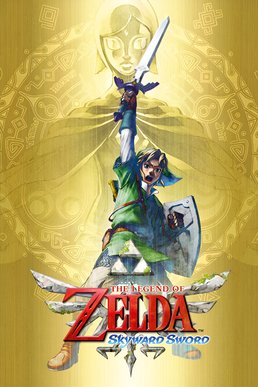
The Legend of Zelda: Skyward Sword
WiiAction-adventureSkyward Sword is the earliest main game in official lore—Skyloft, the Goddess Sword becoming the Master Sword, and Demise's curse. MotionPlus origins later softened in HD.
- Overview
- Motion sword combat, stamina climbing, and pre-Hyrule sky islands answer where the Master Sword cycle begins. Skyward Sword is the earliest main game in official lore—Skyloft, the Goddess Sword becoming the Master Sword, and Demise's curse.
- In-game setting
- Skyward Sword is the earliest main game in official lore—Skyloft, the Goddess Sword becoming the Master Sword, and Demise's curse. Earliest story date among main games. Demise's hatred reincarnates across history. HD: 2021 Switch.
- Should you play it?
- Prefer Skyward Sword HD on Switch. Start here for strict story order—or skip to Ocarina/BotW if you prefer. Remake entry covers modern play.
- Release date
- US Wii launch November 20, 2011. Confirm the The Legend of Zelda: Skyward Sword SKU for your region before buying.
 Preferred
The Legend of Zelda: The Wind Waker HD
Wii URemakeThe Wind Waker HD is the preferred Adult-timeline sail—Swift Sail, upgraded visuals, shortened Triforce hunt versus GameCube.
- Overview
- Wii U HD pass with QoL sailing and gallery extras. Plot identical to GameCube Wind Waker. After Ocarina of Time, follow one branch at a time rather than every Release-date neighbor.
- In-game setting
- Adult timeline—identical plot to Wind Waker. Handheld sequel path unchanged. Remakes share story placement with their originals—buy one version, not both for plot.
- Should you play it?
- Preferred way to play Wind Waker. Afterward: Phantom Hourglass on DS. Skip GameCube original unless collecting.
- Release date
- US Wii U launch September 20, 2013. Same US release window as the matching Release-tab entry unless noted as a lore marker.
The Legend of Zelda: A Link Between Worlds
Nintendo 3DSAction-adventureA Link Between Worlds sequels A Link to the Past's world—Lorule, wall merging, and rent-any-dungeon freedom on 3DS.
- Overview
- Ravio's item rental enables non-linear dungeon order; wall-merge traversal refreshes 2D Zelda. A Link Between Worlds sequels A Link to the Past's world—Lorule, wall merging, and rent-any-dungeon freedom on 3DS.
- In-game setting
- Fallen hero—Yuga and Princess Hilda. Generations after ALttP. Optional next: Tri Force Heroes; main next: Echoes of Wisdom. Remakes share story placement with their originals—buy one version, not both for plot.
- Should you play it?
- Play after A Link to the Past (and ideally Oracles) on Fallen hero. Optional co-op detour: Tri Force Heroes. Leads toward Echoes of Wisdom on that branch.
- Release date
- US 3DS launch November 22, 2013. Same US release window as the matching Release-tab entry unless noted as a lore marker.
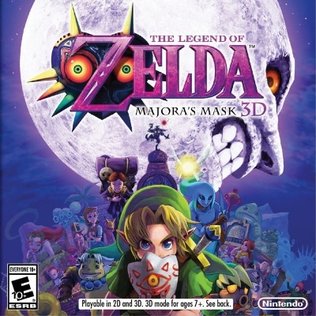 Preferred
The Legend of Zelda: Majora's Mask 3D
Nintendo 3DSRemakeMajora's Mask 3D updates the three-day classic for 3DS—same Child-timeline story with boss and cycle QoL tweaks.
- Overview
- Quality-of-life changes to Bombers' Notebook flow and boss fights while keeping Termina's structure. Majora's Mask 3D updates the three-day classic for 3DS—same Child-timeline story with boss and cycle QoL tweaks.
- In-game setting
- Child timeline—identical placement to N64. Next Child epic: Twilight Princess HD. Remakes share story placement with their originals—buy one version, not both for plot.
- Should you play it?
- Play after Ocarina 3D. Easier than N64 hardware. Same story slot as 2000 Majora's Mask. Official chronology still allows skipping optional co-op entries on a solo lore run.
- Release date
- US 3DS launch February 13, 2015. Same US release window as the matching Release-tab entry unless noted as a lore marker.
 Optional
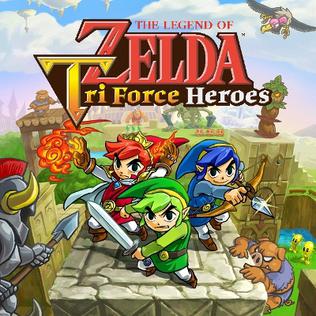
The Legend of Zelda: Tri Force Heroes
Nintendo 3DSMultiplayerOptionalTri Force Heroes is fashion-forward three-player co-op on 3DS—light story in Hytopia after A Link Between Worlds. Easy skip on solo lore runs.
- Overview
- Costume stacking and online/local trio puzzles. Minimal wider-timeline impact. Tri Force Heroes is fashion-forward three-player co-op on 3DS—light story in Hytopia after A Link Between Worlds.
- In-game setting
- Fallen hero side story—Lady Maud. Not required before Echoes of Wisdom or BotW. Remakes share story placement with their originals—buy one version, not both for plot.
- Should you play it?
- Optional—skip unless you want every 3DS entry or co-op. Fallen hero placement after ALBW; Echoes of Wisdom continues main 2D without it. Official chronology still allows skipping optional co-op entries on a solo lore run.
- Release date
- US 3DS launch October 22, 2015. Same US release window as the matching Release-tab entry unless noted as a lore marker.
 Preferred
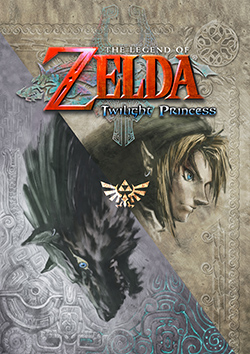
The Legend of Zelda: Twilight Princess HD
Wii URemakeTwilight Princess HD is the polished Child-timeline wolf epic—1080p, amiibo support, faster pacing on Wii U.
- Overview
- HD remaster of Twilight Princess with inventory QoL. Same Midna/Ganondorf story. After Ocarina of Time, follow one branch at a time rather than every Release-date neighbor.
- In-game setting
- Child timeline—same as Wii/GameCube. Far-future jump later: Breath of the Wild. Remakes share story placement with their originals—buy one version, not both for plot.
- Should you play it?
- Best version of Twilight Princess. Play after Majora's Mask on Child branch. Optional later: Four Swords Adventures.
- Release date
- US Wii U launch March 4, 2016. Same US release window as the matching Release-tab entry unless noted as a lore marker.
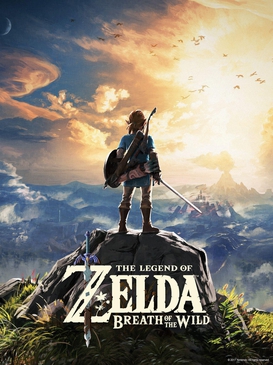
The Legend of Zelda: Breath of the Wild
SwitchWii UAction-adventureOpen worldBreath of the Wild reinvents Zelda as open-air physics playground—shrines, durability, and Calamity Ganon. Best modern entry; earlier games are mostly legend here.
- Overview
- Open Hyrule, chemistry/physics puzzles, and non-linear Divine Beasts. Biggest design shift since Ocarina. Breath of the Wild reinvents Zelda as open-air physics playground—shrines, durability, and Calamity Ganon.
- In-game setting
- Far-future Calamity era. Required before Tears of the Kingdom. Map easter eggs nod to older games without proving a merge.
- Should you play it?
- Start here in 2026 for most newcomers → Tears of the Kingdom. Nintendo has not confirmed which Ocarina branch leads to this era. Backtrack to classics for lore depth.
- Release date
- US Switch and Wii U launch March 3, 2017—Switch launch window title.
 Preferred
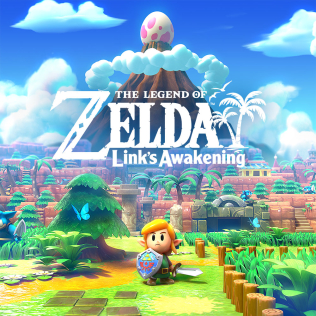
The Legend of Zelda: Link's Awakening
SwitchRemakeLink's Awakening (2019) remakes the Game Boy classic in toy-like Switch 3D—same Koholint story with modern dungeon maps and QoL.
- Overview
- Chibi diorama art and refined controls keep 1993 structure intact while looking new. Link's Awakening (2019) remakes the Game Boy classic in toy-like Switch 3D—same Koholint story with modern dungeon maps and QoL.
- In-game setting
- Fallen hero—identical story to Game Boy Link's Awakening. Next branch games: Oracle duo / ALBW. Remakes share story placement with their originals—buy one version, not both for plot.
- Should you play it?
- Play instead of Game Boy original unless collecting. Same Fallen hero slot as 1993. Oracles still follow on that branch. Official chronology still allows skipping optional co-op entries on a solo lore run.
- Release date
- US Switch launch September 20, 2019. Same US release window as the matching Release-tab entry unless noted as a lore marker.
 Preferred
The Legend of Zelda: Skyward Sword HD
SwitchRemakeSkyward Sword HD brings button controls (and optional motion) to the earliest lore game on Switch—same Demise origin story.
- Overview
- Button-only option fixes Wii MotionPlus pain points. Amiibo and QoL polish the 2011 design. Skyward Sword HD brings button controls (and optional motion) to the earliest lore game on Switch—same Demise origin story.
- In-game setting
- Earliest main game—same as Wii Skyward Sword. Timeline continues toward Minish Cap / Ocarina. Remakes share story placement with their originals—buy one version, not both for plot.
- Should you play it?
- Start of strict story order on modern hardware. Then Minish Cap or jump to Ocarina of Time 3D. Prefer this over Wii original. Official chronology still allows skipping optional co-op entries on a solo lore run.
- Release date
- US Switch launch July 16, 2021. Same US release window as the matching Release-tab entry unless noted as a lore marker.
The Legend of Zelda: Tears of the Kingdom
SwitchAction-adventureOpen worldTears of the Kingdom is the direct Breath of the Wild sequel—sky islands, Depths, Ultrahand building, and Ganondorf's return. Not a standalone entry.
- Overview
- Fuse crafting, Zonai devices, and three-layer Hyrule expand BotW's open-air rules. Tears of the Kingdom is the direct Breath of the Wild sequel—sky islands, Depths, Ultrahand building, and Ganondorf's return.
- In-game setting
- Same far-future era as BotW—Upheaval aftermath. Story endpoint for the open-air pair. Remakes share story placement with their originals—buy one version, not both for plot.
- Should you play it?
- Play only after Breath of the Wild. Latest open-world mainline on this page; Echoes of Wisdom is a separate 2D line. Official chronology still allows skipping optional co-op entries on a solo lore run.
- Release date
- US Switch launch May 12, 2023. Same US release window as the matching Release-tab entry unless noted as a lore marker.
The Legend of Zelda: Echoes of Wisdom
SwitchAction-adventureEchoes of Wisdom lets Princess Zelda lead with Tri Rod echoes—2D adventure on the Fallen hero branch, separate from BotW/TotK's open world.
- Overview
- First mainline game with Zelda as the continuous player character; echo copies recreate objects and enemies. Echoes of Wisdom lets Princess Zelda lead with Tri Rod echoes—2D adventure on the Fallen hero branch, separate from BotW/TotK's open world.
- In-game setting
- Fallen hero after ALBW. Null/Still World plot. NES classics still sit later on that official branch. Echoes of Wisdom lets Princess Zelda lead with Tri Rod echoes—2D adventure on the Fallen hero branch, separate from BotW/TotK's open world.
- Should you play it?
- Latest mainline release on this page (2024). Play after A Link Between Worlds on Fallen hero if strict; otherwise anytime as a Switch 2D entry. Not a BotW sequel.
- Release date
- US Switch launch September 26, 2024. Confirm the The Legend of Zelda: Echoes of Wisdom SKU for your region before buying.
FAQ
Where to start, how the three branches work, and what Nintendo has (and has not) confirmed about the far-future era.
Release order
Release order is what you buy and play by launch date — usually starting at the 1987 original or jumping to Breath of the Wild. Story order follows Hyrule's history: Skyward Sword first, Ocarina of Time next, then one of three official branches (Child, Adult, or Fallen hero), and Breath of the Wild / Tears of the Kingdom far later. Use Release order to decide purchases; use Story order to follow lore.
Story & timelines
Nintendo confirmed that Ocarina of Time splits history into three branches. The defeated-hero branch is also called the Decline timeline in official lore. Child timeline: Link is sent back — Majora's Mask, Twilight Princess, Four Swords Adventures. Adult timeline: the Hero leaves — Wind Waker, Phantom Hourglass, Spirit Tracks. Fallen hero timeline: Link fails — A Link to the Past, Link's Awakening, Oracle, A Link Between Worlds, Tri Force Heroes (optional), Echoes of Wisdom, then the NES Zelda games. On Story order, each branch is a separate colored section — read one section top to bottom. Breath of the Wild and Tears of the Kingdom sit in a far-future section long after every branch.
In a far-future era — thousands of years after the Child, Adult, and Fallen hero games. In this setting, earlier games are mostly remembered as legend, myth, and ruins—not recent history. You can play Breath of the Wild first as an open-world entry, then Tears of the Kingdom (direct sequel only). Nintendo has not confirmed which Ocarina branch this Hyrule follows, and map references to older games are easter eggs, not proof that all branches merged.
Remakes & ports
Optional & skipped
Spin-offs (optional)
Cadence of Hyrule: Crypt of the NecroDancer feat. The Legend of Zelda shipped in the US on June 13, 2019 (Nintendo Switch). It is a rhythm roguelike crossover with Brace Yourself Games' Crypt of the NecroDancer—not a main-series RPG and not on Hyrule Historia. Play after Breath of the Wild if you want BotW-style art in a roguelike; no story order ties it to Ocarina's three branches. Crypt of the NecroDancer (2015) is the base game—optional first if you care about the mechanics, not required for Zelda fans.
Link's Crossbow Training launched in the US on November 19, 2007 for Wii (often bundled with the Wii Zapper shell). It is a first-person gallery shooter built to show off the Zapper—no story, not part of any timeline branch, and not listed on the main release-order titles here. Skip unless you are collecting every Zelda-branded cartridge; it does not affect BotW or classic lore runs.
Other timelines
Hyrule Warriors — musou crossover (Wii U through Definitive Edition) plus Age of Calamity. Best for hack-and-slash—not canon on the Story tab here.
Cadence of Hyrule, Link's Crossbow Training, and Game & Watch — no separate pages; US order and why are in the Spin-offs (optional) section below.
More timelines
Other release-order and story-order guides on this site.
- Game series
Hyrule Warriors
Hyrule Warriors games in US release order (2014–2020)—musou crossover, Definitive…
- Game series
Horizon
Horizon release and story order (2017–2024)—Zero Dawn, Forbidden West, Burning Shores,…
- Game series
Metroid
Metroid release and story order (1987–2025)—2D exploration, Prime first-person saga,…
- Consoles
Nintendo consoles
All Nintendo consoles in US release order (1985–2025)—NES through Switch 2, Game Boy,…
- Game series
Splatoon
Splatoon games in order (2015–2022)—Wii U through Splatoon 3, Octo Expansion and Side…
- Game series
Super Smash Bros.
Super Smash Bros games in order (1999–2018)—N64 through Ultimate, separate 3DS/Wii U…
- Game series
Ori
Ori games in order—Blind Forest and Will of the Wisps on the continuous Nibel saga,…