
Handheld US launch dates · 1989–2023
Handheld consoles in US release order
Fourteen major handheld and hybrid/portable systems in US release order—from the Game Boy and Atari Lynx (1989) through PlayStation Portal (2023), including Game Gear, Neo Geo Pocket Color, DS, PSP, 3DS, Vita, Nintendo Switch, Switch Lite, and Steam Deck. Brand-complete home lists stay on the Nintendo, PlayStation, and Xbox console pages; model variants (SP, Lite, OLED, Go) are in the FAQ below.
Release order
Game Boy & Lynx (1989) → Game Gear → Game Boy Color → Neo Geo Pocket Color → GBA → DS → PSP → 3DS → Vita → Switch → Switch Lite → Steam Deck → PlayStation Portal (2023).
- This is a cross-brand handheld timeline in US release order—Nintendo, Sega, Sony, Atari, SNK, and Valve portables on one list
- We don't list prices, bundles, or where to buy—check manufacturers or your preferred retailer
- For full home + handheld brand shelves, see Nintendo, PlayStation, and Xbox console timelines
At a glance
Game Boy & Lynx (1989) → Game Gear → Game Boy Color → Neo Geo Pocket Color → GBA → DS → PSP → 3DS → Vita → Switch → Switch Lite → Steam Deck → PlayStation Portal (2023).
Tap a year to jump straight to that console.
Handheld consoles in order
When each console launched in the US — from the Magnavox Odyssey to today.
99th generation
1989–2023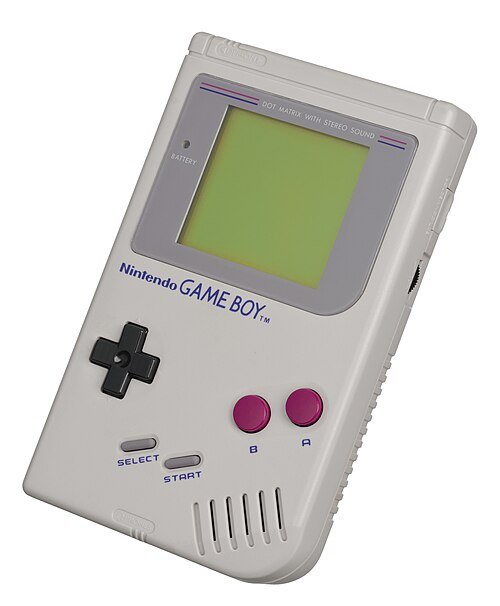 N
NGame Boy
Nintendo's greyscale Game Boy won the first handheld war by shipping a rugged cartridge system kids could carry to school without draining AA batteries in an afternoon. The dot-matrix screen looked ancient beside color rivals, yet Tetris and later Pokémon proved library depth and stamina beat backlit specs on the bus.
- What's new
- Cartridge portability with multi-day AA battery life; the Link Cable turned schoolyards into multiplayer sessions years before Wi-Fi handhelds became standard.
- Hardware
- Japan April 21, 1989; US launch July 31, 1989 (launch price $89.95). Pocket (1996), Color (1998), and Japan-only Light revisions extended the same cartridge line.
- Standout games
- Pack-in Tetris owned launch mindshare; Pokémon Red/Blue fueled the late-1990s second wave. Successor: Game Boy Color; rivals on this list: Lynx and Game Gear.
- Context
- Defined the US mass-market handheld after July 1989. Lynx and Game Gear sold color flash; Nintendo sold affordability, durability, and a software catalog rivals could not match.
 A
AAtari Lynx
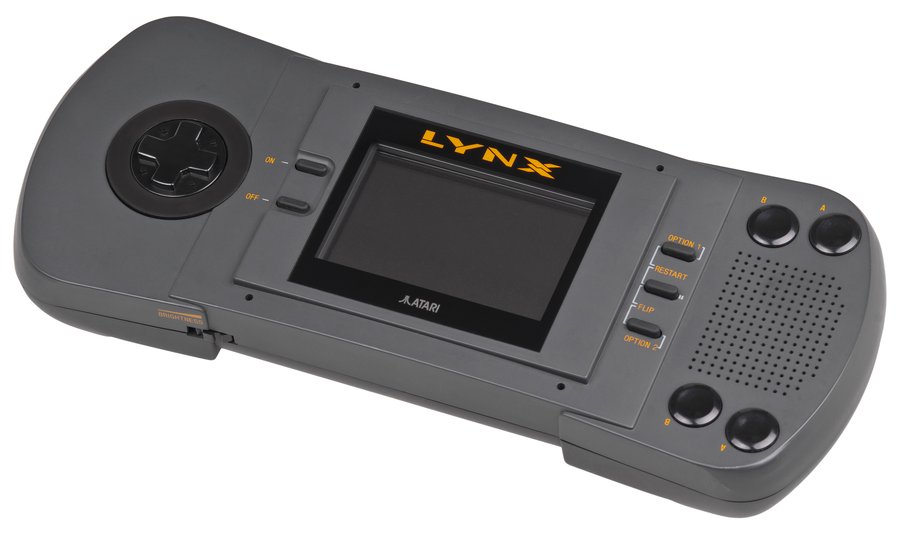
Atari's Lynx arrived in 1989 as the first color handheld with a backlit LCD and hardware rotation that made arcade ports feel ambitious on the go. Six AA batteries and a thin third-party library kept it a cult footnote while the greyscale Game Boy became the default Christmas gift.
- What's new
- Backlit color LCD with flip-friendly ambidextrous controls and hardware scaling—technical leaps monochrome Game Boy could not match, at the cost of brutal battery drain.
- Hardware
- US launch September 1989 (limited New York rollout, then national). Lynx II revision (1991) slimmed the shell; no successor generation followed.
- Standout games
- Arcade-style ports and Atari experiments headline a short commercial window. Competitor: Game Boy (same year); color rival: Game Gear (1991).
- Context
- Niche enthusiast chapter beside Nintendo's volume play. Atari never matched Game Boy software depth; Lynx survives as a collector curiosity in US handheld history.
 SE
SEGame Gear
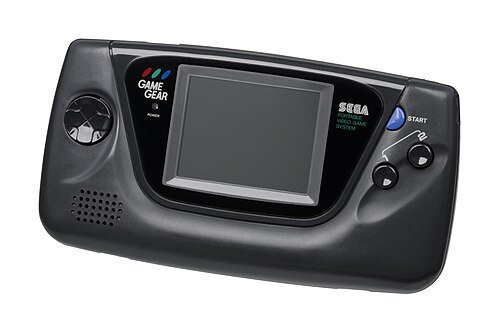
Sega's Game Gear brought Master System–class color graphics to US shelves on April 26, 1991—landscape layout, backlit screen, and Sonic on a portable that ate six AA batteries in a few hours. It was the credible color alternative to Game Boy, yet worldwide sales still trailed Nintendo's greyscale juggernaut.
- What's new
- Full-color backlit LCD in a landscape shell; Master System adapter and TV Tuner accessories stretched the hardware beyond straight game playback.
- Hardware
- Japan October 6, 1990; US April 26, 1991. Six AA batteries, roughly 3–5 hours typical play; competed directly with Game Boy and Lynx on this timeline.
- Standout games
- Sonic the Hedgehog, Columns, and Shinobi anchor the shelf. Successor line: none—Sega exited dedicated handhelds after Game Gear.
- Context
- Strong second-place color handheld in North America and Europe. Battery hunger and software gaps kept it from overturning Game Boy despite Sega's home-console momentum.
 N
NGame Boy Color
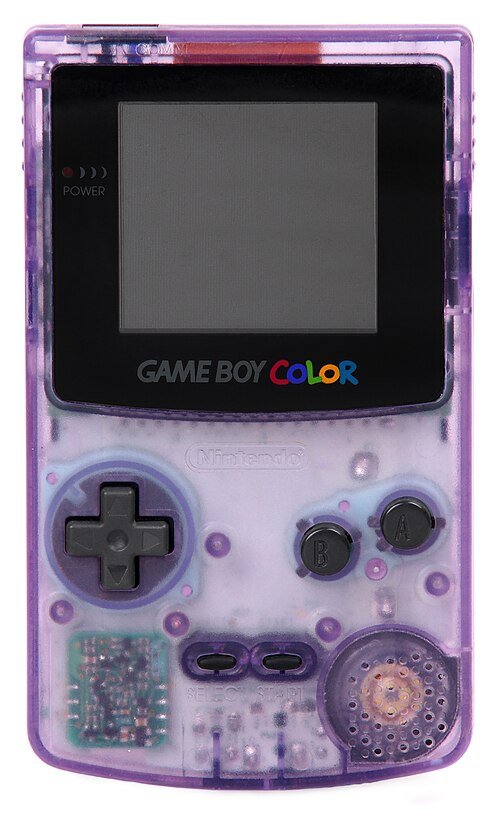
Nintendo's Game Boy Color (US November 18, 1998) added a color LCD without abandoning the Game Boy cartridge slot—original greyscale carts still booted, while new Color titles pushed brighter palettes. It bridged the classic Game Boy era into the 32-bit Game Boy Advance without forcing families to rebuy their libraries.
- What's new
- Backward-compatible color upgrade on the same cartridge ecosystem; infrared link and sharper screens refined portable Nintendo play without a full generational reset.
- Hardware
- Japan October 21, 1998; US November 18, 1998. Played original Game Boy and Game Boy Color cartridges; direct predecessor to Game Boy Advance on this list.
- Standout games
- Pokémon Gold/Silver and Zelda Oracle duo defined the Color era. Next hardware row: Neo Geo Pocket Color (1999), then GBA (2001).
- Context
- Mass-market bridge between 1989 Game Boy and 2001 GBA. Huge install base carried the Pokémon Gold/Silver generation and late-1990s third-party RPG ports.
 ?
?Neo Geo Pocket Color
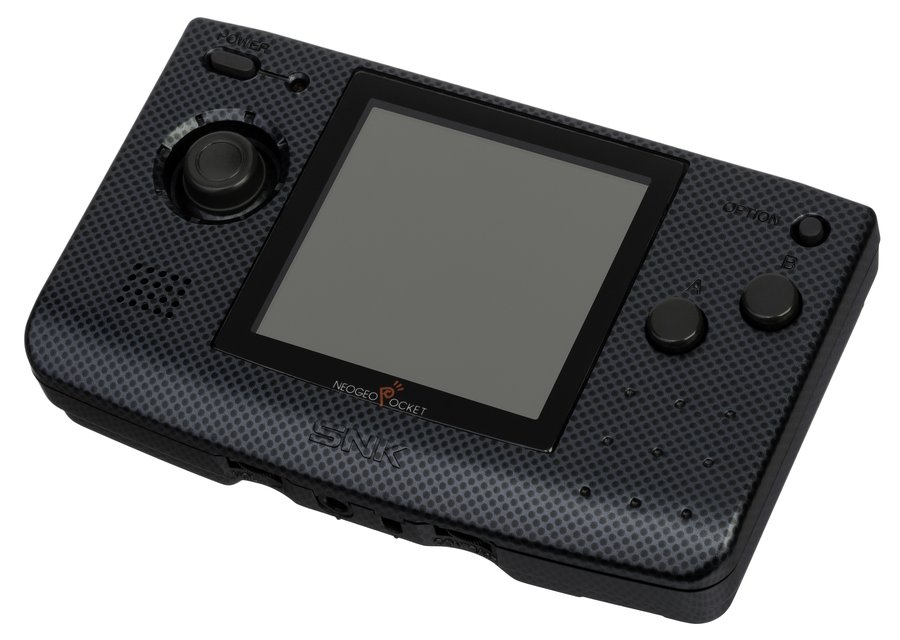
SNK's Neo Geo Pocket Color packed arcade fight-stick DNA into a pocket shell—microswitched stick, crisp sprite art, and battery life that embarrassed backlit rivals. US launch August 6, 1999 landed a cult favorite, but Western support vanished quickly after SNK's financial turmoil.
- What's new
- True joystick on a handheld with fighter-first ergonomics; long battery life versus color backlit competitors made it a tournament-travel curiosity.
- Hardware
- Japan March 16, 1999 (monochrome NGPC earlier in Japan); US August 6, 1999. No US successor—SNK handheld line ended with this generation.
- Standout games
- SNK vs. Capcom, King of Fighters, and Sonic Pocket Adventure headline the short Western shelf. Competitor context: Game Boy Color dominated volume.
- Context
- Fighting-game niche against Game Boy Color's mass market. Western retail support ended fast; Japanese enthusiasts kept the library alive in collector circles.
 N
NGame Boy Advance
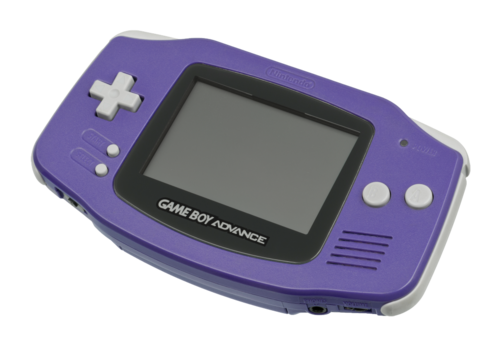
The Game Boy Advance (US June 11, 2001) delivered SNES-class sprites in a landscape portable—32-bit power with a cartridge slot that still accepted Game Boy and Color games. SP and Micro revisions later refined the form, but this launch defined Nintendo's pre-DS cartridge peak.
- What's new
- 32-bit portable visuals with backward compatibility for Game Boy and Color cartridges on the same slot—no rebuy required for families upgrading hardware.
- Hardware
- Japan March 21, 2001; US June 11, 2001. SP (2003) and Micro (2005) are FAQ variants, not separate rows here.
- Standout games
- Pokémon Ruby/Sapphire, Metroid Fusion, and Advance Wars anchor the library. Successor: Nintendo DS (2004); rival era: PSP (2005).
- Context
- Peak pre-DS cartridge handheld for Nintendo first-party and third-party RPGs, platformers, and tactical games through the early 2000s.
 N
NDS
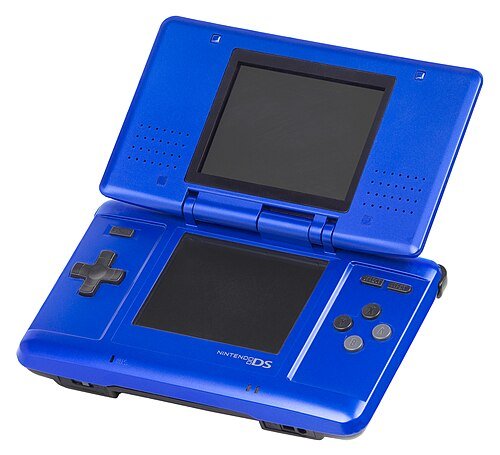
Nintendo's DS (US November 21, 2004) reinvented portables with dual screens, a touch stylus, and early models that still accepted GBA carts in Slot-2. Lite, DSi, and XL revisions followed, but the original clamshell launch sold the idea that touch could be a primary input—not a gimmick.
- What's new
- Touch, microphone, and dual-screen design opened new genres; early hardware kept GBA backward play until DSi removed the slot.
- Hardware
- US November 21, 2004. DS Lite (2006), DSi (2008), and DSi XL are same-library revisions—see FAQ, not separate timeline rows.
- Standout games
- Nintendogs, Brain Age, and Pokémon Diamond/Pearl sold the mainstream audience. Next row: PSP (2005); successor: Nintendo 3DS (2011).
- Context
- Best-selling handheld generation of its era; defined 2000s portable Nintendo before 3DS and Switch hybrid dominance replaced dual-screen as the default form.
 S
SPSP
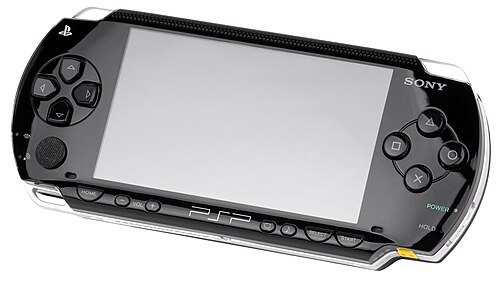
Sony's PlayStation Portable (US March 24, 2005) promised console-adjacent graphics on the go—UMD movies, Wi-Fi multiplayer, and an analog nub that felt closer to home PlayStation than DS touch experiments. It sold tens of millions yet still finished second to Nintendo's dual-screen juggernaut.
- What's new
- UMD video discs, infrastructure-mode Wi-Fi, and later PS3 Remote Play turned PSP into a media device—not just a game cartridge successor to the PocketStation dream.
- Hardware
- US March 24, 2005. Slim 2000/3000 and PSP Go (2009) are FAQ variants; direct competitor on this list: Nintendo DS.
- Standout games
- God of War: Chains of Olympus, Crisis Core, and Monster Hunter Freedom Unite headline the shelf. Successor: PlayStation Vita (2012).
- Context
- Defined portable AAA for Sony fans even as DS won total volume. Strong in Japan and among Western action/RPG players through the late 2000s.
 N
N3DS
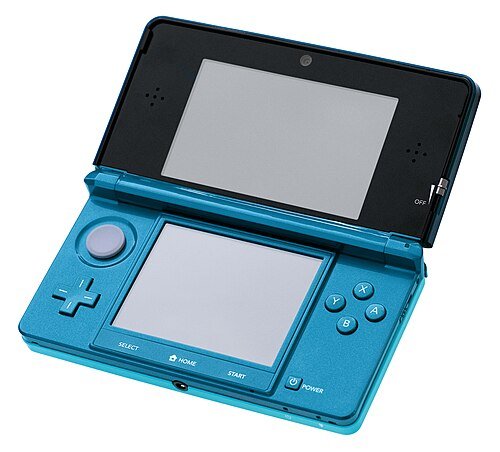
Nintendo's 3DS (US March 27, 2011) added glasses-free stereoscopic 3D and StreetPass social features to the dual-screen template—then spent a decade leaning on RPG remakes and first-party depth as mobile phones ate casual players. New 3DS revisions extended life until Switch absorbed the audience.
- What's new
- Autostereoscopic 3D without glasses; StreetPass and SpotPass gave retail-era Nintendo portables a social layer Wi-Fi alone did not replicate.
- Hardware
- Japan February 26, 2011; US March 27, 2011. XL, 2DS, and New 3DS family are FAQ variants on the same generation.
- Standout games
- First-party RPGs and remakes thrived; Virtual Console deepened the back catalog. Successor: Nintendo Switch (2017); Sony peer: PS Vita (2012).
- Context
- Final major dual-screen dedicated portable before Switch hybrid dominance. 2DS removed 3D for budget buyers without abandoning the software library.
 S
SVita
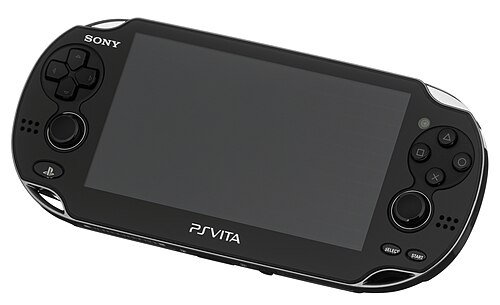
Sony's PS Vita (US February 22, 2012) finally delivered dual analog sticks, a gorgeous OLED launch screen, and rear touchpad experiments—critically adored, commercially starved as first-party support faded mid-decade. It became Sony's last dedicated handheld before remote-play accessories replaced the category.
- What's new
- Dual analogs matched home-console controls on a handheld; front and rear touch opened mechanics PSP could not support at scale.
- Hardware
- US February 22, 2012 (OLED PCH-1000); PCH-2000 slim LCD revision followed. No cartridge successor until PlayStation Portal (2023) on this list.
- Standout games
- Persona 4 Golden, Gravity Rush, and Uncharted: Golden Abyss show the library Vita deserved more of. Competitor: Nintendo 3DS.
- Context
- Sold far below PSP and 3DS; Sony shifted focus to PS4 and later Portal-style streaming rather than a Vita successor generation.
 N
NSwitch
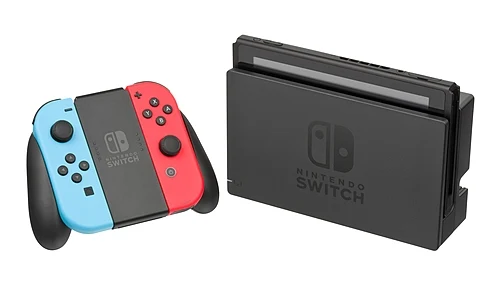
Nintendo's Switch (US March 3, 2017) made hybrid play the default—dock for TV, undock for handheld, Joy-Con controllers that snap off for instant multiplayer. Listed here for portable mode; the full Nintendo home line lives on the Nintendo consoles page.
- What's new
- Seamless dock/handheld transitions with detachable Joy-Con local multiplayer; one SKU replaced separate home and handheld purchase decisions for many families.
- Hardware
- US March 3, 2017. Switch Lite (2019) and OLED (2021) are FAQ variants; Lite gets its own row next as handheld-only SKU.
- Standout games
- Breath of the Wild and Animal Crossing: New Horizons prove hybrid software gravity. Handheld-only follow-up: Switch Lite; PC rival: Steam Deck.
- Context
- Modern Nintendo baseline until Switch 2; massive install base pulled third-party support back to Nintendo portables after the Wii U drought.
 N
NSwitch Lite
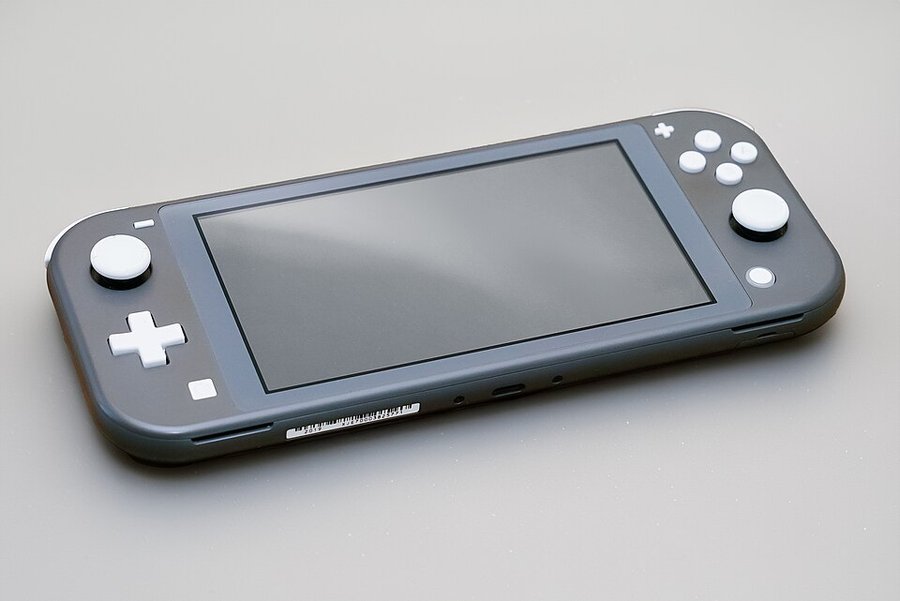
The Switch Lite (US September 20, 2019) is a handheld-only Switch—fixed controls, no TV dock, and the same cartridge library with exceptions for Joy-Con–required titles. Nintendo positioned it as a cheaper portable SKU inside the Switch generation, not a new platform.
- What's new
- Cost-down dedicated handheld form for players who never dock; D-pad and fixed sticks target solo portable play over detachable Joy-Con party games.
- Hardware
- US September 20, 2019. Plays standard Switch Game Cards; some titles need external Joy-Con or Pro Controller—check Nintendo compatibility lists.
- Standout games
- Same software shelf as base Switch—no Lite exclusives. Choose Lite for portable price; compare to Steam Deck (2022) for PC-library portability.
- Context
- Distribution play inside the Switch ecosystem—not a generational leap. Families chose Lite for price and portability, OLED or base Switch for TV play.
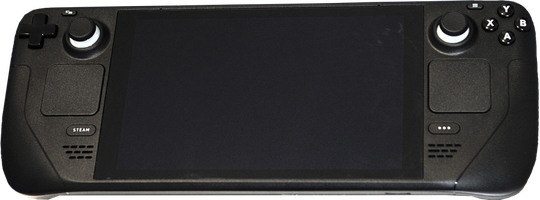 ?
?Steam Deck
Valve's Steam Deck (US reservations fulfilled from February 25, 2022) brought a full x86 PC and Steam library to a handheld shell—SteamOS, trackpads, and Deck Verified badges instead of cartridge exclusives. It opened the modern handheld-PC wave competing with Switch on portability philosophy, not Nintendo software.
- What's new
- Handheld PC form with SteamOS and controller-first UI; dockable to monitors like a micro console for thousands of existing PC titles.
- Hardware
- North America / EU / Japan shipments from February 25, 2022. OLED revision (2023) is FAQ variant; not a separate generation row here.
- Standout games
- Your Steam library is the catalog—Deck Verified status matters more than first-party launch titles. Peer: Switch hybrid; unlike PSP/Vita, no Sony/ Nintendo cartridge line.
- Context
- Reshaped portable gaming in the 2020s for PC owners; competes with Switch on where you play, not on Mario or Pokémon exclusives.
 S
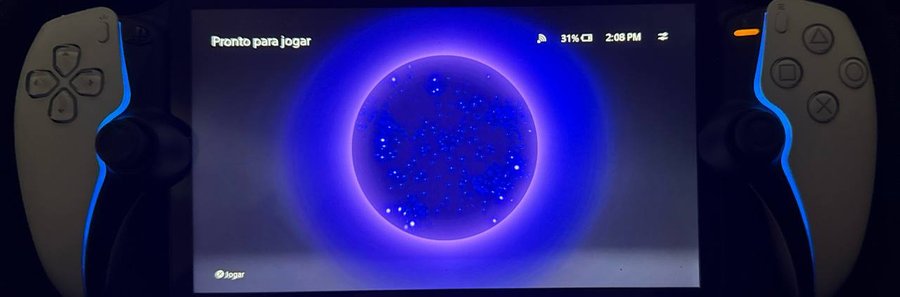
SPS1 Portal
Sony's PlayStation Portal (US November 15, 2023) is a DualSense-shaped remote-play screen for PS5—not a standalone handheld with its own cartridge or download store. It streams from a home console over Wi-Fi, closing Sony's portable hardware story after Vita in a very different form factor.
- What's new
- Dedicated remote-play hardware with DualSense haptics and adaptive triggers streamed from a local PS5—portable feel without onboard game storage as primary design.
- Hardware
- US November 15, 2023. Requires PS5 on the same network; no UMD/card slot—unlike PSP and Vita rows above.
- Standout games
- Plays whatever your PS5 library owns via streaming—no separate portable catalog. Compare prior Sony rows: PSP (2005) and Vita (2012) on this timeline.
- Context
- Accessory chapter after Vita, not a Vita successor with native software. Optional on this cross-brand handheld history list if you only want self-contained systems.
FAQ
How many handhelds are listed, which came first, hybrid vs pure portable, Steam Deck and Portal notes, and links to brand console pages.
Basics
This timeline lists 14 major handheld, hybrid, and portable devices in US release order—from Game Boy and Atari Lynx (1989) through PlayStation Portal (2023). Brand-complete home shelves and every Lite/OLED/SP shell are not duplicated as separate generations here.
On this US list, the Game Boy (July 31, 1989) is the first entry. The Atari Lynx followed in September 1989 as the first color handheld. Earlier single-game devices like Game & Watch (1980) are portable toys—not multi-game cartridge handhelds on this page.
US release order on this page: Game Boy (1989) → Atari Lynx (1989) → Game Gear (1991) → Game Boy Color (1998) → Neo Geo Pocket Color (1999) → Game Boy Advance (2001) → Nintendo DS (2004) → PSP (2005) → Nintendo 3DS (2011) → PS Vita (2012) → Nintendo Switch (2017) → Switch Lite (2019) → Steam Deck (2022) → PlayStation Portal (2023).
Hybrids & PCs
History
Related pages
More timelines
Other release-order and story-order guides on this site.
- Consoles
Nintendo consoles
All Nintendo consoles in US release order (1985–2025)—NES through Switch 2, Game Boy,…
- Consoles
PlayStation consoles
All PlayStation consoles in US release order (1995–2020)—PS1 through PS5, PSP and PS…
- Consoles
Xbox consoles
All Xbox consoles in US release order (2001–2020)—original Xbox through Series X | S,…
- Consoles
Sega consoles
All Sega consoles in US release order (1986–1999)—Master System through Dreamcast,…
- Consoles
Game consoles
History and US release dates for major home and hybrid video game consoles, from…