
Release & story order
Gran Turismo timeline
Polyphony Digital's Gran Turismo from GT1 (1998) through Gran Turismo 7 (2022)—US release dates for every major numbered entry plus Gran Turismo Sport, no fiction timeline, PSP portable spin-offs in FAQ, and where racing fans should start in 2026.
Pick your path:
Release order
When Polyphony Digital shipped each major Gran Turismo in the US—GT1 (1998) through GT7 (2022), plus Gran Turismo Sport (2017). PSP entries and GT7 DLC are optional.
- Play today → Gran Turismo 7 on PS5 / PS4—the current live-service sim
- Retro marathon → GT1 through GT6 in release order on legacy hardware or classics
- Sport → online-focused stopgap before GT7—see FAQ for overlap
- PSP Gran Turismo and GT Mobile are optional—not mainline entries
Story order tips
Gran Turismo has no shared plot—each entry is a standalone driving simulator with licensed cars and tracks. Story order mirrors Release for historical context only.
- No narrative links—pick GT7 if you only buy one game
- Car roster grows each generation—Release order shows franchise evolution
- Sport and GT7 both ran online esports—GT7 superseded Sport for new players
- Story order equals Release order by design
Story order
Gran Turismo has no shared plot—each entry is a standalone driving simulator with licensed cars and tracks. Story order mirrors Release for historical context only.
- No narrative links—pick GT7 if you only buy one game
- Car roster grows each generation—Release order shows franchise evolution
- Sport and GT7 both ran online esports—GT7 superseded Sport for new players
- Story order equals Release order by design
Timeline
When each game was released. Click a game for platforms, dates, and where it fits in your playthrough.
Release order
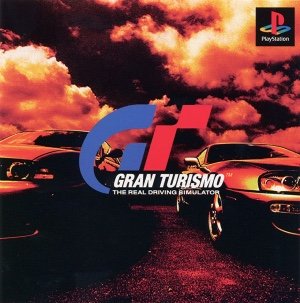
Gran Turismo
PS1RacingSimMainlineGran Turismo (often called GT1) launched Polyphony Digital's realistic driving sim on PlayStation—licensed cars, tuning, and gold-license tests that defined console simulation racing. It is dated today but still the franchise origin.
- Overview
- Kazunori Yamauchi's team brought dealer-lot car culture, suspension tuning, and strict license exams to living-room consoles.
- In-game setting
- Gran Turismo (often called GT1) launched Polyphony Digital's realistic driving sim on PlayStation—licensed cars, tuning, and gold-license tests that defined console simulation racing. Roughly 140+ cars at launch with license tests gating faster machinery. Historic but hardware-
- Should you play it?
- Series origin—play for history or PS1 nostalgia, not as a 2026 daily driver. Newcomers should start at Gran Turismo 7.
- Release date
- US PlayStation (PS1) launch May 12, 1998. Later classics/emulation paths vary by region—verify current store reissues.
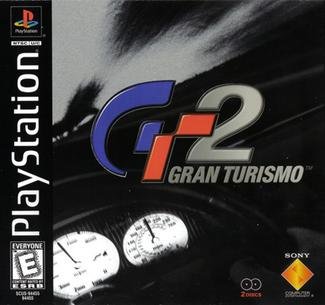
Gran Turismo 2
PS1RacingSimMainlineGran Turismo 2 roughly doubled the car list and split Arcade versus Simulation careers on PS1, adding rally and street divisions. It cemented GT as the deep single-player grind before the PS2 leap.
- Overview
- Expanded manufacturer variety, rally stages, and a thicker Simulation Mode ladder. Gran Turismo 2 roughly doubled the car list and split Arcade versus Simulation careers on PS1, adding rally and street divisions.
- In-game setting
- Hundreds of cars across arcade and sim paths; rally cars broaden the garage. Next: Gran Turismo 3: A-Spec on PS2.
- Should you play it?
- Retro milestone after Gran Turismo—optional unless completing full GT history. Skip to GT3/GT4 for classic PS2 peaks or straight to GT7 for modern play.
- Release date
- US PlayStation (PS1) launch December 23, 1999. Dual-shock era PS1 title; no modern remaster as of 2026.
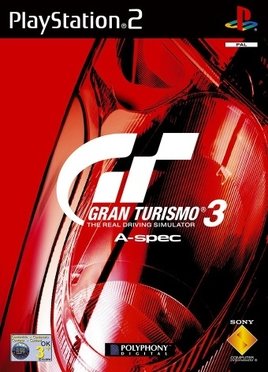
Gran Turismo 3: A-Spec
PS2RacingSimMainlineGran Turismo 3: A-Spec was the PS2-era showcase—fewer cars than GT2 but sharper visuals, sound, and handling that introduced a generation to Polyphony's sim. Many players still call it their first real GT.
- Overview
- PS2 hardware leap: denser track detail, improved tire feel, and flagship license tests. Gran Turismo 3: A-Spec was the PS2-era showcase—fewer cars than GT2 but sharper visuals, sound, and handling that introduced a generation to Polyphony's sim.
- In-game setting
- First mainline GT on PS2; smaller roster than GT2 traded for fidelity. Next deep career: Gran Turismo 4. Related: PlayStation consoles.
- Should you play it?
- Classic GT benchmark after the PS1 duo—great nostalgia stop before GT4's sprawling career. Not required before GT7.
- Release date
- US PlayStation 2 launch July 10, 2001—early PS2 generation showcase title.
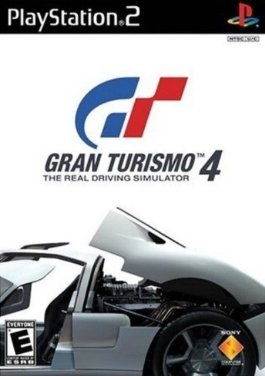
Gran Turismo 4
PS2RacingSimMainlineGran Turismo 4 is the peak PS2 GT for many fans—massive car roster, B-Spec AI manager mode, photo mode, and GPS-accurate layouts in a long single-player grind. Development famously stretched, and the depth still shows.
- Overview
- B-Spec lets you manage an AI driver; photo mode and precise track surveying raised simulation prestige. Used Cars and endurance events deepened the economy loop.
- In-game setting
- Gran Turismo 4 is the peak PS2 GT for many fans—massive car roster, B-Spec AI manager mode, photo mode, and GPS-accurate layouts in a long single-player grind. Often cited as the deepest classic GT career. Next numbered: Gran Turismo 5 on PS3.
- Should you play it?
- Play after GT3 on a PS2 marathon—still loved via legacy hardware or emulation. Online-era players can jump from here toward GT5/GT6 or skip to GT7.
- Release date
- US PlayStation 2 launch February 22, 2005. Late-PS2 flagship; no official PS5 remaster.
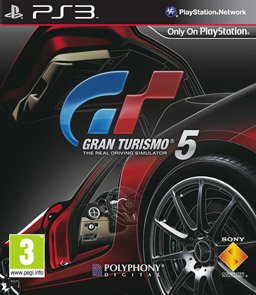
Gran Turismo 5
PS3RacingSimMainlineGran Turismo 5 debuted the series on PS3 with damage modeling, online races, and a controversial Premium vs Standard car split. Slow post-launch updates fleshed out what shipped as an unfinished-feeling giant.
- Overview
- First GT on PS3 with optional 3D display support, kart/NASCAR experiments, and deeper online. Gran Turismo 5 debuted the series on PS3 with damage modeling, online races, and a controversial Premium vs Standard car split.
- In-game setting
- Huge roster with fidelity tiers; Vision GT concepts begin seeding future liveries. Direct follow-up: Gran Turismo 6.
- Should you play it?
- PS3-era GT after GT4—superseded for online by GT6 and especially GT7. Play for history or if you already own a PS3 garage; newcomers buy Gran Turismo 7.
- Release date
- US PlayStation 3 launch November 24, 2010. Online features depend on remaining service status—offline career still playable on disc.
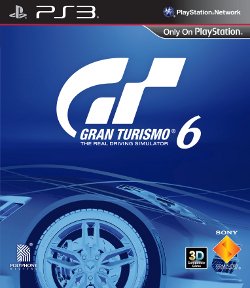
Gran Turismo 6
PS3RacingSimMainlineGran Turismo 6 closed the major PS3 GT era with refined physics, community events, and more Vision GT concepts. It bridges classic numbered careers toward the online PS4 experiment of Gran Turismo Sport.
- Overview
- Improved AI and physics iteration on the PS3 GT engine; course creators and seasonal events kept the garage alive.
- In-game setting
- Gran Turismo 6 closed the major PS3 GT era with refined physics, community events, and more Vision GT concepts. Final numbered GT on PS3. Next: Gran Turismo Sport on PS4, then Gran Turismo 7.
- Should you play it?
- End of the PS3 GT line—collectors and legacy players only for online. Next Release stop is Gran Turismo Sport (not numbered GT7).
- Release date
- US PlayStation 3 launch December 6, 2013. Servers eventually sunset; offline content remains on disc where supported.

Gran Turismo Sport
PS4RacingSimOnlineGran Turismo Sport was an online-first PS4 GT with FIA partnership and manufacturer cups—not numbered GT8. Smaller offline campaign than classic GT, built as an esports and Sport Mode stopgap before GT7.
- Overview
- Always-online emphasis, sports-car-focused roster at launch, and structured FIA-style championships. Gran Turismo Sport was an online-first PS4 GT with FIA partnership and manufacturer cups—not numbered GT8.
- In-game setting
- Parallel PS4 entry, not a classic career remake. Gran Turismo 7 merges Sport-style online with Café campaign structure.
- Should you play it?
- Superseded for newcomers by Gran Turismo 7—buy Sport only if you already invested in its esports scene. Sits between GT6 and GT7 on Release; no fiction arc.
- Release date
- US PlayStation 4 launch October 17, 2017. Online features require network; verify current server status before purchase.
Gran Turismo 7
PS5PS4RacingSimMainlineGran Turismo 7 is the current mainline GT—Café campaign, VR support on PS5, ray-traced modes, and live car/track updates. It blends classic GT structure with Sport-era online and is the only buy most players need in 2026.
- Overview
- Returns deep single-player progression while keeping Sport Mode online and FIA-flavored events. Gran Turismo 7 is the current mainline GT—Café campaign, VR support on PS5, ray-traced modes, and live car/track updates.
- In-game setting
- Default 2026 entry with Café story-of-progression and Sport Mode. Legacy numbered GTs remain optional history.
- Should you play it?
- Start here if you only buy one Gran Turismo—replaces Sport for new players. No prior GT required. Follow Start Here if you want the shortest 2026 checklist that still includes this chapter.
- Release date
- US PlayStation 5 and PlayStation 4 launch March 4, 2022. Ongoing live updates and DLC-style car packs via patches—check store notes for VR headset requirements.
FAQ
Release order for mainline GT simulators, Sport vs GT7, PSP spin-offs out of scope, and links to other racing timelines.
Play order
They list the same games in the same sequence. Release order is when Polyphony shipped each major Gran Turismo in the US (1998–2022). Story order duplicates Release because GT games have no shared narrative—each is a standalone driving simulator.
Most players only need Gran Turismo 7 on PS5 or PS4. Historians can marathon GT1 → GT2 → GT3 → GT4 → GT5 → GT6 → Sport → GT7 in release order on legacy hardware or classics collections. GT7 alone covers modern online and campaign content.
No. Gran Turismo games do not continue one plot—only car rosters, physics, and modes evolve. Follow Release order if you want franchise history, or jump to GT7 for the modern experience.
What's included
Gran Turismo Sport (2017, PS4) was an online-first spin on the formula—not numbered GT8. Gran Turismo 7 (2022, PS5 / PS4) merges classic GT campaign structure with Sport-style online. New buyers should get GT7; Sport is legacy unless you already invested in its esports scene.
Gran Turismo (PSP) (2009), Gran Turismo Mobile, and other portable experiments are not mainline numbered entries on this page—kept optional to keep Release manageable. Play GT7 for the current full sim; PSP is optional retro context.
Optional & related
More timelines
Other release-order and story-order guides on this site.
- Game series
F-Zero
F-Zero release and story order (1991–2003)—SNES through GameCube, Captain Falcon saga,…
- Game series
Mario Kart
Mario Kart games in US release order (1992–2020)—SNES through Switch, Mario Kart 8…
- Game series
Sonic Racing
Sonic racing games in US release order (1997–2025)—Sonic R through CrossWorlds, Riders…
- Consoles
PlayStation consoles
All PlayStation consoles in US release order (1995–2020)—PS1 through PS5, PSP and PS…
- Game series
Need for Speed
Need for Speed games in order from Underground through Unbound—curated Western…
- Game series
Forza
Forza games in order—Motorsport sim lane vs Horizon open-world arcade, curated…